
Metal part manufacturing often becomes difficult when conventional machining, casting, or molding cannot efficiently produce intricate geometries. Internal channels, lightweight structures, integrated components, and customized molds may require multiple processes or impose design compromises. Metal additive manufacturing offers another approach by building parts layer by layer from digital models. For manufacturers evaluating this technology, the key question is not simply whether 3D metal printing can produce metal parts, but which design limitations it can realistically overcome.
Creating Complex Internal Geometries
One of the major design challenges in conventional manufacturing is producing internal structures that are difficult or impossible to reach with cutting tools. Machining generally requires physical access to the material being removed, while traditional mold production also places restrictions on the shape and routing of internal features.
3D metal printing changes this design logic. Since material is deposited according to a digital model, engineers can develop enclosed channels, lattice structures, curved passages, and other geometries that are difficult to manufacture through subtractive processes.
LiMN 3D identifies heat exchangers, cooling lattices, heat sinks, impellers, and complex mold waterways among its metal 3D printing applications. The company also highlights mold manufacturing, where additive manufacturing can produce complex cooling channels and structural components.
This capability can be valuable for industrial components where thermal management or fluid flow is a central performance requirement. Instead of adapting the design to the limitations of a machining tool, engineers can consider the functional geometry first and then evaluate its manufacturability through the additive process.
Reducing Design Constraints for Lightweight Parts
Weight reduction is another challenge, particularly in aerospace, automotive, and other applications where component mass affects system performance. Conventional manufacturing can make some lightweight structures difficult or expensive to produce because removing material while maintaining adequate strength requires careful machining and multiple operations.
Metal additive manufacturing supports more freedom to use lattice structures, topology-optimized forms, and other material-efficient geometries. These designs can place material where it contributes most to structural performance while removing unnecessary mass from less critical areas.
LiMN 3D specifically describes aerospace applications in terms of complex geometries, reduced weight, and improved mechanical and thermal performance. Its application examples include aerospace bearings and an aero-engine tail skirt.
For engineering teams, this means design optimization can become a more direct part of the manufacturing process. Instead of designing a conventional part first and modifying it only to make machining possible, engineers can consider additive manufacturing requirements during the initial design stage.
Combining Multiple Features Into One Part
Complex assemblies can also create manufacturing challenges. A component may traditionally require several separately manufactured pieces, followed by welding, fastening, brazing, or other assembly operations. Each additional interface can introduce manufacturing tolerances and increase the number of production steps.
3D metal printing can make it possible to consolidate selected features into fewer components when the geometry and application are suitable. LiMN 3D states that its technology can help optimize designs and reduce part count in automotive applications. Its listed examples include automobile brakes, car wheels, and other automotive components.
Part consolidation does not automatically make every product better. Engineers still need to consider support structures, post-processing, inspection, material properties, and service requirements. However, metal additive manufacturing gives design teams another option when evaluating whether an assembly can be simplified.
Improving Mold Cooling and Thermal Design
Mold manufacturing presents a particularly useful example of the design freedom offered by 3D metal printing. Conventional drilling methods often make cooling channels relatively straightforward but geometrically restricted. When a channel needs to follow a complicated cavity surface, conventional approaches can become less flexible.
Additive manufacturing can create conformal or otherwise complex cooling paths that follow the geometry of the mold more closely. LiMN 3D highlights complex cooling channels as an application of its technology and lists automobile door frame molds, tire molds, and shoe molds among its sample applications.
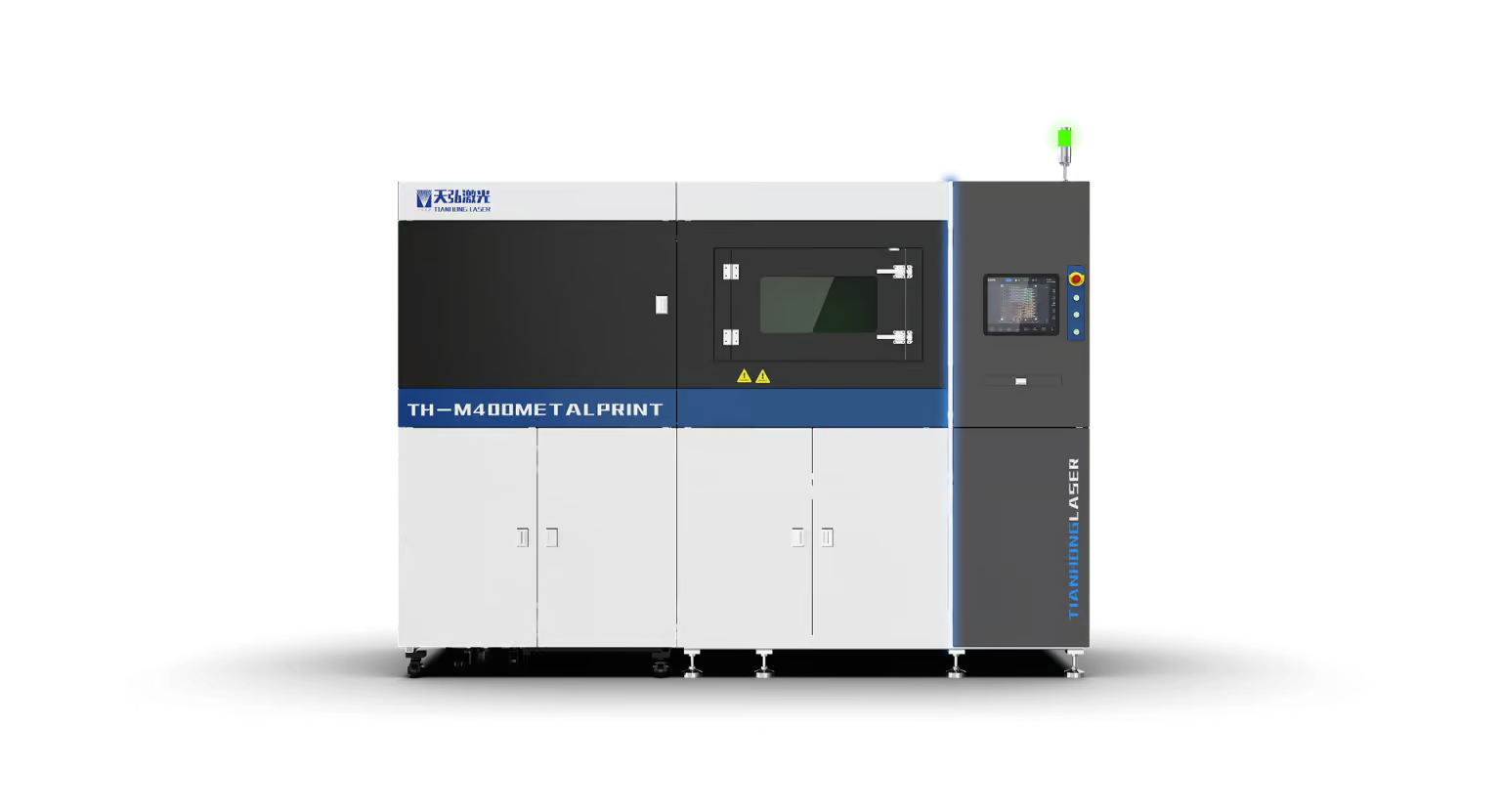
The LM-M400 is positioned for applications including shoe molds and aerospace. It adopts metal powder bed melting technology and is equipped with four 500 W lasers. The company states that its multi-laser scanning strategy and calibration algorithm are designed to support high printing efficiency and controllable quality.
Supporting Large and Complex Production Requirements
The value of design freedom also depends on whether the printer can handle the intended production scale. The LM-M400 has listed machine dimensions of 2960 × 1270 × 2500 mm, a 20–120 μm layer thickness range, and 380 V, 34 kW consumption.
Its four-laser configuration is designed to cover the build area through a coordinated scanning strategy. According to the supplied LM-M400 product information, the system reaches a maximum forming efficiency of 140 cm³/h. It also uses a closed powder circulation loop and supports powder sieving, printing, cooling, and depowdering within a protective gas atmosphere.
These capabilities are relevant when manufacturers need to move beyond one-off prototypes toward repeatable industrial production. Large-format capacity and multi-laser processing can help connect greater design freedom with practical throughput requirements.
Maintaining Control Over the Digital Manufacturing Process
Design freedom is only useful when the manufacturing system can translate digital designs into consistent physical parts. Software, process parameters, scanning strategies, and machine control therefore become important considerations.
The LM-M400 uses software, algorithms, and a control system independently developed by Linmu3D, according to the supplied product information. Its process parameters are described as open source, with personalized customization available for different production requirements.
LiMN 3D also states that its broader solutions cover requirement analysis, technical support, prototype development, training, installation, and maintenance. The company says its equipment supports metal 3D printing with accuracy within 0.1 mm for complex metal parts.
Expanding What Engineers Can Design
Traditional metal manufacturing remains essential, but certain geometries are constrained by tooling access, assembly requirements, cooling-channel limitations, and material-removal processes. 3D metal printing addresses these challenges by providing greater freedom to create internal structures, lightweight geometries, integrated components, and complex mold features.
LiMN 3D‘s LM-M400 illustrates how these possibilities can be connected with industrial production through metal powder bed melting, four 500 W lasers, a 20–120 μm layer thickness range, and multi-laser process strategies. For manufacturers exploring metal additive manufacturing, the technology can provide a practical route to reconsider designs that conventional processes make difficult, costly, or impractical.
