
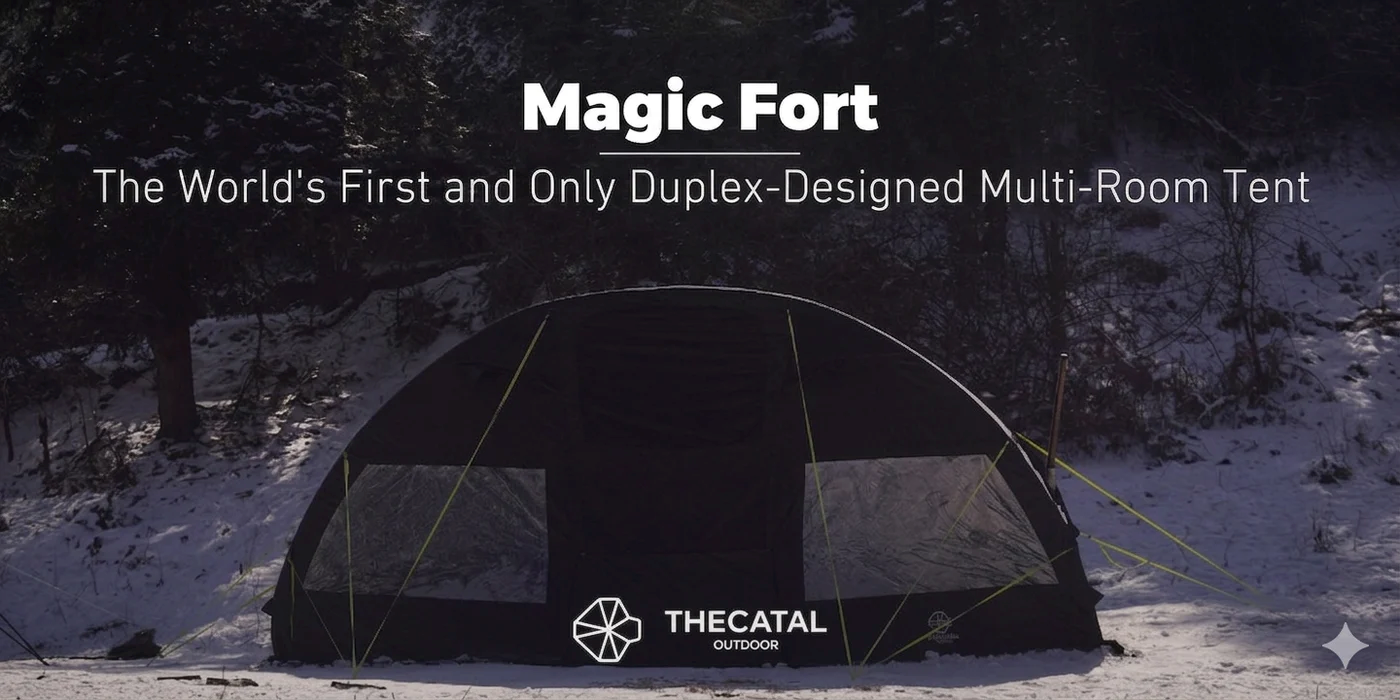
Adventure operators need group shelters that combine guest comfort with practical commercial performance. A glam camping tent can provide spacious accommodation, but sourcing decisions should also consider capacity, durability, weather protection, setup time, transportation, and long-term operational needs.
Start with Practical Capacity
For adventure operators, capacity directly affects how efficiently a campsite can accommodate guests. A large tent can be useful for guided tours, family adventures, outdoor education programs, corporate retreats, and organized camping experiences.
However, advertised capacity should not be the only consideration. A tent may technically sleep 12 people, but the actual guest experience depends on how much usable floor space remains after sleeping arrangements and luggage are added. Operators should examine the number of rooms, available walking space, entrance configuration, and possibilities for separating sleeping and communal areas.
THECATAL Magic Fort is designed with approximately 40 m² of interior space and can accommodate 12 or more people. Its duplex structure also creates additional vertical space, making the interior more suitable for group accommodation. This type of layout can give operators greater flexibility when arranging different guest groups.
Check the Interior Layout
A commercial tent should be easy to adapt to different types of guests. Families may prefer separated sleeping areas, while youth or adventure groups may place greater importance on shared space and equipment storage.
A multi-room design can make these arrangements easier. Operators can allocate specific areas for sleeping, changing, luggage, and general activities instead of using one large open space for everything.
When reviewing a 12 person camping tent, operators should therefore look beyond the stated occupancy figure. Floor plans, ceiling height, room separation, access points, and practical storage space can all influence the value of shelter.
A flexible layout can also simplify campsite management. Staff can organize different groups according to their needs without requiring several smaller tents for every activity.
Evaluate Material and Durability
Commercial tents are exposed to more frequent use than equipment intended for occasional personal camping. Operators may need to assemble and dismantle shelters repeatedly while accommodating guests with different levels of outdoor experience.
Material selection is therefore an important sourcing factor. THECATAL Magic Fort uses silicone-coated 70D nylon fabric, providing a lightweight outer structure designed for outdoor conditions. For operators, the relevant question is not simply how a material looks or feels, but whether it suits the expected climate and frequency of use.
Other components should also be evaluated. Zippers, seams, floors, poles, attachment points, and doors can influence maintenance requirements. Operators should request clear information about care, replacement components, and warranty coverage before committing to a larger order.
Durability should be evaluated as part of the complete tent system rather than through fabric specifications alone.
Consider Weather Conditions
Adventure operations can expose tents to rain, wind, heat, and cooler temperatures. Local climate should therefore influence the sourcing decision from the beginning.
Weather protection is especially important for group accommodation because guests may spend several hours inside the tent. At the same time, ventilation should remain effective. A tent that restricts airflow too severely can experience condensation, especially when many occupants share the same interior.
Magic Fort is built for diverse outdoor conditions and comes with a stove jack opening compatible with external heating devices. Its dual side two way zipper design vents harmful fumes, helping maintain tent security for safer cold weather camping. This can provide additional flexibility for operators offering camping experiences during cooler periods.
However, businesses should match products to their actual operating environment. A coastal campsite, mountain destination, forest retreat, and dry inland location may place different demands on the same tent.
Assess Setup Efficiency
Setup time directly impacts operational labor costs. Adventure and glamping operators frequently need to set up, dismantle, clean, and relocate tents between guest batches. The Magic Fort features a fast setup of under 10 minutes, greatly reducing on-site preparation time. It significantly improves operational efficiency and lowers labor expenses, especially when multiple tents are deployed at the same campsite.
Commercial tent selection should focus not only on fast one-time assembly but on consistent, repeatable workflow performance. Operators must evaluate labor requirements, operational simplicity, part identification, and standardized packing and dismantling processes to ensure stable, long-term commercial usability for frequent camp operations.
Review Transportation and Storage
Large group tents provide more interior accommodation, but they also create additional logistical requirements. Operators should check packed dimensions, weight, carrying cases, and storage space before purchasing.
For mobile adventure businesses, transportation can be particularly important. The available vehicle space may determine how many tents and supporting supplies can be carried between locations. A shelter with excellent guest capacity may still become inefficient if its packed volume creates transportation difficulties.
Warehouse storage should also be considered. Businesses operating seasonally may need to store tents for extended periods, so dry, organized storage and proper packing procedures are essential for maintaining equipment.
Consider the Supplier
Sourcing decisions should include the supplier as well as the physical product. Lead times, communication, warranty terms, product documentation, accessories, and support for repeat purchases can affect the overall buying experience.
THECATAL offers products such as Magic Fort for outdoor accommodation applications, giving commercial operators a potential option when searching for large group camping shelters.
Before placing an order, adventure operators should confirm specifications, availability, delivery arrangements, maintenance guidance, and after-sales support. If the business expects to expand its campsite later, consistent product availability can also become an important consideration.
Build a Balanced Sourcing Standard
A suitable group tent should meet both guest and business requirements. Operators should compare capacity, layout, material construction, weather protection, setup efficiency, transportation, storage, and supplier support as a complete package.
The right sourcing decision is therefore not simply about finding the largest shelter. It is about selecting a tent that can accommodate guests comfortably while remaining practical for staff to operate repeatedly.
Final Thoughts
For adventure operators, a 12-person tent should balance spacious accommodation with durability and operational efficiency. Reviewing the complete product and supplier package can help businesses choose equipment that supports reliable outdoor experiences.
