
Kitchen design in 2026 places greater emphasis on personalized layouts, practical storage, and visual consistency across connected living spaces. For distributors, wholesalers, and private-label brands, these changes affect product selection, customization, and purchasing plans.
Experienced kitchen sink manufacturers respond by adjusting product configurations, evaluating new finishes, and coordinating production with buyer requirements. Understanding these developments helps B2B purchasers assess whether a supplier can support changing market preferences while maintaining consistent product quality and manageable lead times.
Multifunctional Sinks Reflect Changing Kitchen Layouts
The National Kitchen & Bath Association’s 2026 Kitchen Trends Report identifies multifunctional spaces, personalized design, and improved storage as important directions in residential kitchens. These preferences create opportunities for manufacturers to develop sinks that support food preparation, cleaning, and storage within a shared workspace.
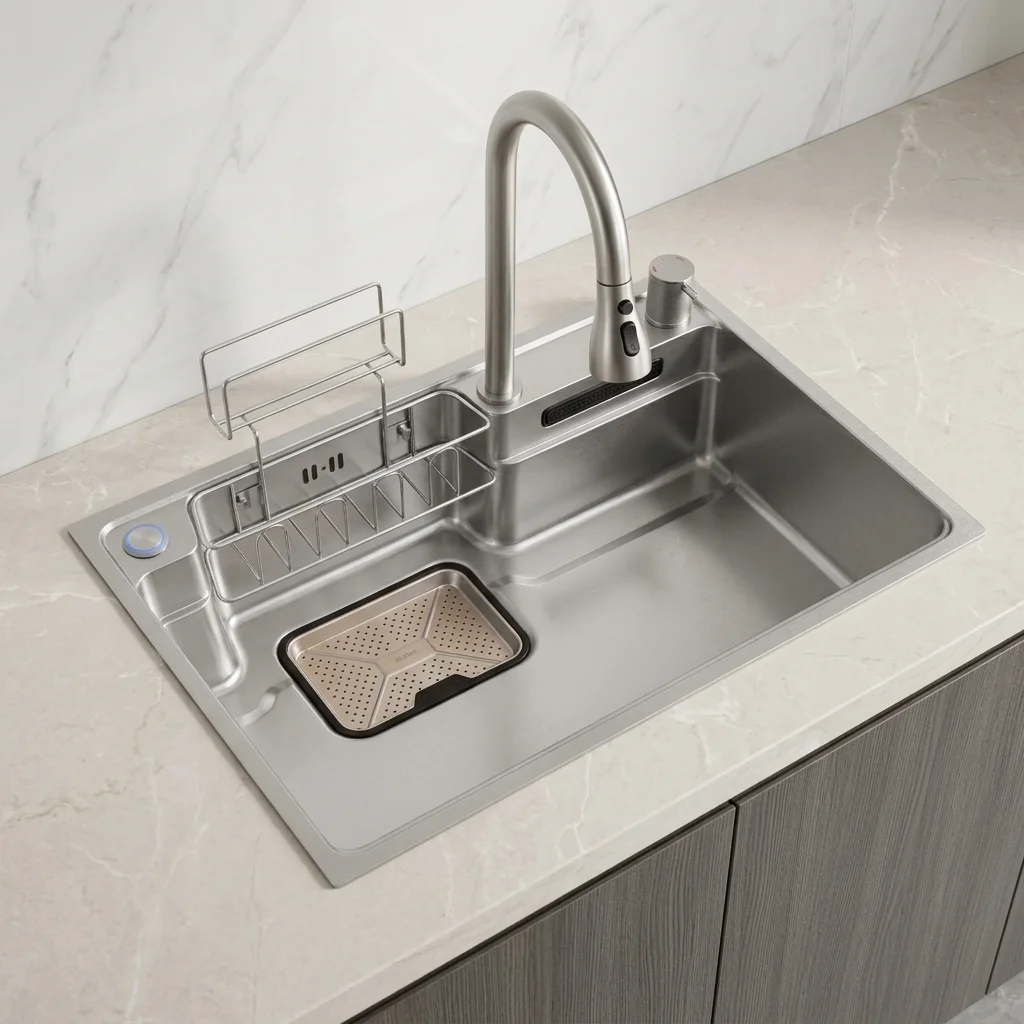
Workstation sinks are one example. Integrated ledges can accommodate cutting boards, colanders, and drying racks, allowing users to complete several tasks around one basin. For manufacturers, this design requires careful coordination between basin dimensions, accessory compatibility, drainage placement, and installation clearances.
B2B buyers should assess the entire configuration rather than focusing only on the number of accessories. They should confirm which components are included, whether replacements can be ordered, and whether installation instructions are available. These details help distributors explain product differences and reduce misunderstandings after delivery.
Manufacturers with in-house research and development can evaluate design modifications before production. Testing prototypes and reviewing sample feedback can help identify usability problems early, particularly when buyers request adjustments for specific customer groups.
Surface Finishes Need to Match Market Requirements
Neutral colors, natural materials, and understated styles feature prominently in the NKBA’s 2026 outlook. These preferences influence how sinks coordinate with countertops, cabinetry, and faucets. Brushed stainless steel remains a versatile option, while darker metallic tones and colored finishes provide additional choices for projects with more specific design requirements.
However, appearance should not be the only consideration when evaluating a finish. Buyers should assess cleaning requirements, resistance to visible wear, and consistency between production batches. For coated products, suppliers should explain the finishing process and provide relevant quality criteria.
Private-label businesses can use approved samples to establish expectations for color, texture, dimensions, and surface condition. This becomes particularly important when a collection includes several finishes or when repeat orders must match existing inventory.
Rather than introducing every available option, distributors can begin with a core selection and test additional finishes in measured quantities. Reviewing sales data and customer feedback provides a practical basis for deciding which products deserve further investment.
Customization Supports Different Customer Segments
Kitchen projects differ in cabinet dimensions, installation methods, price positioning, and aesthetic preferences. Manufacturers therefore need processes that accommodate varied requirements without creating unnecessary production complexity.
Customization may involve basin dimensions, bowl configurations, installation styles, and surface treatments. OEM and ODM services also allow buyers to develop products under their own brands, subject to agreed specifications and manufacturing capabilities.
When comparing top kitchen sink manufacturers, procurement teams should examine how each supplier manages customized orders. Relevant questions include whether technical drawings are available, how samples are approved, what minimum order quantities apply, and how design changes affect costs or delivery schedules.
A documented development process establishes responsibilities before production begins. Buyers provide design objectives and market requirements, while the manufacturer evaluates tooling, material availability, production feasibility, and inspection procedures. This process can help distributors develop differentiated collections without overlooking manufacturing constraints.
Production Planning Connects Design With Supply Reliability
New product concepts need to be supported by stable material sourcing and realistic production schedules. A design may attract buyer interest, but unpredictable delivery dates can complicate warehouse planning, retail commitments, and project coordination.
AOGLAN is a kitchen sink manufacturer with 26 years of production experience. It boasts a professional R&D and design team and robust production capabilities; the company supports OEM/ODM orders, can customize kitchen sinks according to customer requirements, and provides one-stop solutions.
These capabilities are relevant to businesses considering customized products or recurring wholesale orders. However, buyers should confirm the capacity and lead time applicable to their specific order rather than assuming every model follows the same schedule.
AOGLAN’s product categories include multifunctional sinks, round kitchen sinks, and push-down sinks. Buyers can evaluate these options against their intended markets, installation requirements, and target price ranges.
Before signing a supply agreement, procurement teams should clarify material availability, production milestones, inspection requirements, packaging standards, and after-sales procedures. Written delivery commitments and regular communication help businesses coordinate incoming stock with customer demand.
Quality Control Remains Central to Supplier Evaluation
As product ranges become more varied, inspection procedures need to cover both standard and customized models. Relevant checks may include dimensional accuracy, surface condition, drainage performance, forming quality, and accessory compatibility.
Buyers can define acceptance criteria before production and request inspection records for agreed quality checkpoints. Retaining approved samples and specification documents also helps identify differences between batches.
After-sales support deserves similar attention. Distributors should understand how suppliers investigate defects, provide replacement components, and respond to technical questions. Clear procedures help businesses manage customer concerns and assess the ongoing costs associated with a product range.
Building a Product Strategy for 2026
Kitchen sink manufacturers are responding to design developments through multifunctional configurations, finish options, customization, and more structured production planning. For B2B buyers, the objective is to identify products that suit their customers while maintaining practical requirements for quality, pricing, and supply continuity.
Businesses considering a manufacturing partnership can review AOGLAN to assess its product categories, development capabilities, and OEM or ODM services. Comparing these offerings with sample quality, order requirements, and confirmed delivery schedules can support informed sourcing decisions as kitchen preferences continue to evolve.
