
Electrical systems must handle changing loads every day, but excessive current can damage conductors, equipment, and connections if it is not interrupted in time. This is where a miniature circuit breaker plays an important role. As a common component among electrical control products, an MCB is designed to disconnect a circuit when an overload or short circuit occurs.
Understanding how a breaker detects these conditions helps engineers, contractors, and procurement teams select suitable protection devices for different installations. It also explains why the right combination of rated current, tripping characteristics, breaking capacity, and accessories matters when designing a dependable low-voltage distribution system.
How a Miniature Circuit Breaker Detects an Overload
An overload occurs when the current flowing through a circuit remains above its rated level for a period of time. This can happen when too many loads are connected to one circuit or when equipment draws more current than expected during operation.
A miniature circuit breaker typically uses a thermal mechanism to respond to sustained overcurrent. As excessive current passes through the breaker, heat causes the internal bimetallic element to deform. When the deformation reaches the required operating point, the mechanism releases and opens the circuit.
The thermal response is important because not every temporary increase in current should cause an immediate interruption. A suitable MCB allows normal operating conditions while responding when excessive current persists. This helps reduce unnecessary trips while protecting conductors and connected equipment from prolonged overload conditions.
What Happens During a Short Circuit?
A short circuit is different from a normal overload. It can produce a very high current almost immediately because of an unintended low-resistance connection between conductors.
To respond to this condition, a breaker uses a magnetic tripping mechanism. When the fault current rises sharply, the magnetic force activates the trip mechanism and opens the circuit rapidly. The speed of this response helps limit the duration of the fault and reduces the stress placed on the electrical installation.
For this reason, the breaking capacity of an MCB is an important specification. The selected device must be capable of safely interrupting the prospective fault current at the installation point. Rated current alone does not provide enough information to determine whether a breaker is suitable for a particular circuit.
Why Tripping Characteristics Matter
Different electrical loads can have different starting and operating current profiles. Selecting an MCB therefore requires consideration of its tripping characteristics as well as its rated current.
For lighting circuits, socket circuits, control circuits, and other general applications, the appropriate characteristic depends on the expected load behavior and installation requirements. If a breaker is selected without considering these factors, it may trip unnecessarily during normal equipment operation or fail to provide the intended level of protection.
The miniature circuit breaker application should therefore be evaluated together with conductor size, system voltage, load characteristics, prospective short-circuit current, and coordination with upstream and downstream protective devices.
When Is an AC Miniature Circuit Breaker Appropriate?
An AC miniature circuit breaker is intended for alternating-current distribution systems and is commonly used for terminal circuits in residential, commercial, and general industrial environments. Typical applications include lighting circuits, socket circuits, small equipment, and branch distribution.
When selecting an AC MCB, users should verify the rated voltage, rated current, frequency, number of poles, breaking capacity, tripping characteristic, and applicable standards. Installation dimensions and terminal compatibility can also be important when replacing existing devices or integrating the breaker into a distribution board.
The distinction between AC and DC protection should not be overlooked. DC circuits have different interruption characteristics, so a device specifically designed and rated for DC applications may be required. Choosing the correct product according to the actual electrical system is essential for safe operation.
When Should You Use a Miniature Circuit Breaker with Auxiliary Contact?
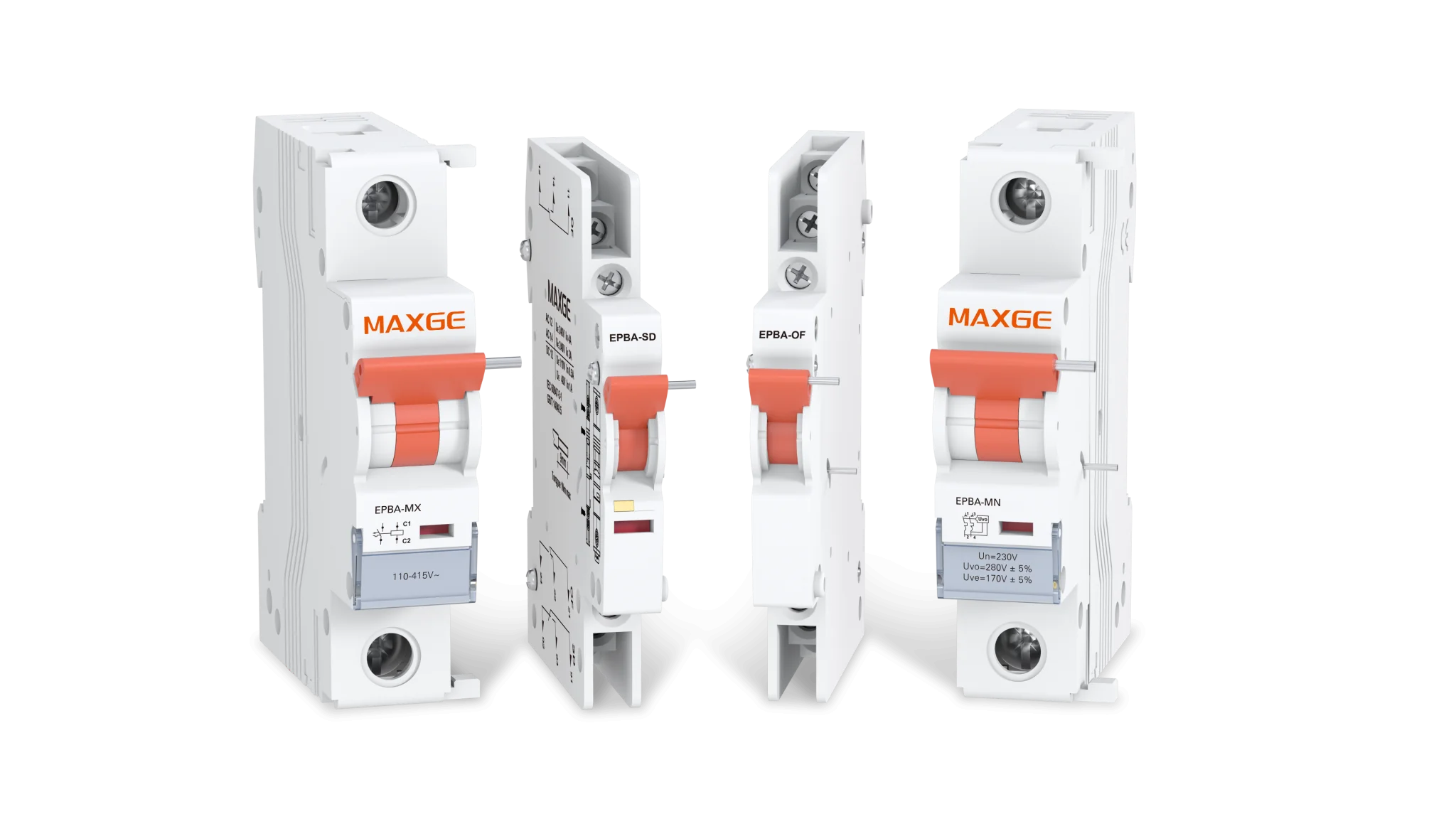
Some installations require more than basic circuit protection. A miniature circuit breaker with auxiliary contact can provide additional status information to a control or monitoring system. The auxiliary contact can be used to indicate the operating or trip status of the breaker, depending on the accessory configuration.
This can be useful in installations where operators need to monitor circuit conditions from a control panel or integrate protective devices into a broader electrical control system. Rather than manually checking every breaker, status signals can support more efficient operation and fault identification.
MAXGE provides MCB accessories including contacts and releases, while its broader product range covers MCBs, RCD and RCBO products, MCCBs, ACBs, smart breakers, distribution boxes, industrial devices, and other electrical control products.
Selecting the Right Protection for the Installation
Choosing a breaker should begin with the actual requirements of the circuit rather than simply selecting the most convenient rated current. Engineers and installers should consider the load, conductor capacity, operating environment, fault level, system configuration, and required coordination.
Product documentation is also important when evaluating electrical control products. Clear technical specifications make it easier to compare models, confirm compatibility, and establish consistent product selection across different projects.
MAXGE offers a range of miniature circuit breakers and related protection and control products for different low-voltage applications. Its product portfolio includes MCBs and MCB accessories alongside other circuit protection and industrial control devices.
Practical Protection Starts With the Right Breaker
The operating principle of a miniature circuit breaker is straightforward, but selecting the appropriate device requires consideration of the complete electrical system. Thermal protection helps address sustained overload conditions, while magnetic protection provides a rapid response to short-circuit faults. Together, these mechanisms support the protection needs of many low-voltage circuits, while factors such as rated current, breaking capacity, trip characteristics, and accessory configuration can further influence product selection.
For projects requiring electrical protection and control products, MAXGE combines product development with manufacturing and testing capabilities to support different application requirements. Its low-voltage electrical portfolio extends beyond MCBs and auxiliary-contact configurations to protection solutions used in renewable energy, PV, energy storage, and EV charging systems. Supported by its R&D team, patented technologies, software copyrights, CNAS-related laboratory capabilities, and international certifications, MAXGE continues to develop products for evolving electrical applications.
To discuss MCB specifications, auxiliary contact options, or other protection requirements, you can contact MAXGE through its official contact page. MAXGE also supports customers across more than 60 countries through a network of over 80 distribution partners, with MAXGE, EMA, and GEBLER forming its broader brand portfolio.
