
During a busy dinner service, a cooking station may move from high heat to gentle simmering several times within a few minutes. At the same time, staff work beside hot appliances for hours, while managers need to control energy use and keep the kitchen running smoothly. These everyday demands explain why more restaurants are considering the commercial induction cooker when planning new kitchens or replacing older cooking appliances.
Induction does not automatically suit every restaurant. Menu style, cookware, electrical capacity, ventilation, and kitchen layout still matter. Its growing use comes from several practical differences in how heat is produced and controlled.
Heat Goes Directly to the Cookware
Traditional gas cooking creates a flame beneath the pan. Some of that heat reaches the cookware, while some spreads into the surrounding kitchen. Induction works differently. An electromagnetic field interacts with compatible cookware, causing the cookware itself to heat.
This difference matters during restaurant service. The cooking process can respond quickly when a chef changes the power setting because there is no burner element that first needs to heat up or cool down.
Direct heating can also reduce unnecessary heat around an individual cooking station compared with an open flame. The actual effect varies with the equipment, cooking process, cookware, and kitchen conditions.
Why Faster Heat Adjustment Matters During Service
Restaurant kitchens rarely cook one dish repeatedly at one fixed setting. Sauces may need gentle heating, while other dishes require a rapid increase in temperature. Chefs often make several adjustments before a dish leaves the station.
Induction equipment can respond quickly to these changes. This gives cooks more immediate control over heat input. For restaurants preparing dishes with several temperature stages, that response can make the cooking sequence easier to manage during busy periods.
A commercial induction cooking equipment setup can also use clearly defined power or temperature settings. This can help restaurant teams develop repeatable cooking procedures, although staff technique, ingredient quantity, pan size, and recipe design remain important.
A Cooler Cooking Station Can Affect Kitchen Planning
Kitchen temperature is more than a comfort issue. Excess heat can influence working conditions and increase the cooling load within an enclosed restaurant kitchen.
Induction does not use an exposed flame to heat the cookware. As a result, less unused heat may be released immediately around the appliance. This characteristic can be relevant in compact kitchens where several cooking stations operate close together.
Restaurants still need proper ventilation. Frying, boiling, grilling, and other processes produce steam, grease, smoke, and cooking vapors regardless of the heat source. Hood requirements and local regulations should therefore be reviewed before equipment changes are made.
Different Menus Need Different Equipment Formats
The move toward induction is also connected with the variety of equipment now available. Restaurants are no longer limited to a single portable hob. Induction technology can be used in table-top units, built-in cookers, woks, fryers, pasta cookers, warming stations, and other kitchen equipment.
This gives operators more choices when designing individual workstations. A noodle restaurant may have different requirements from a hotel buffet or a kitchen focused on wok cooking. Equipment format should follow the menu and workflow rather than the technology alone.
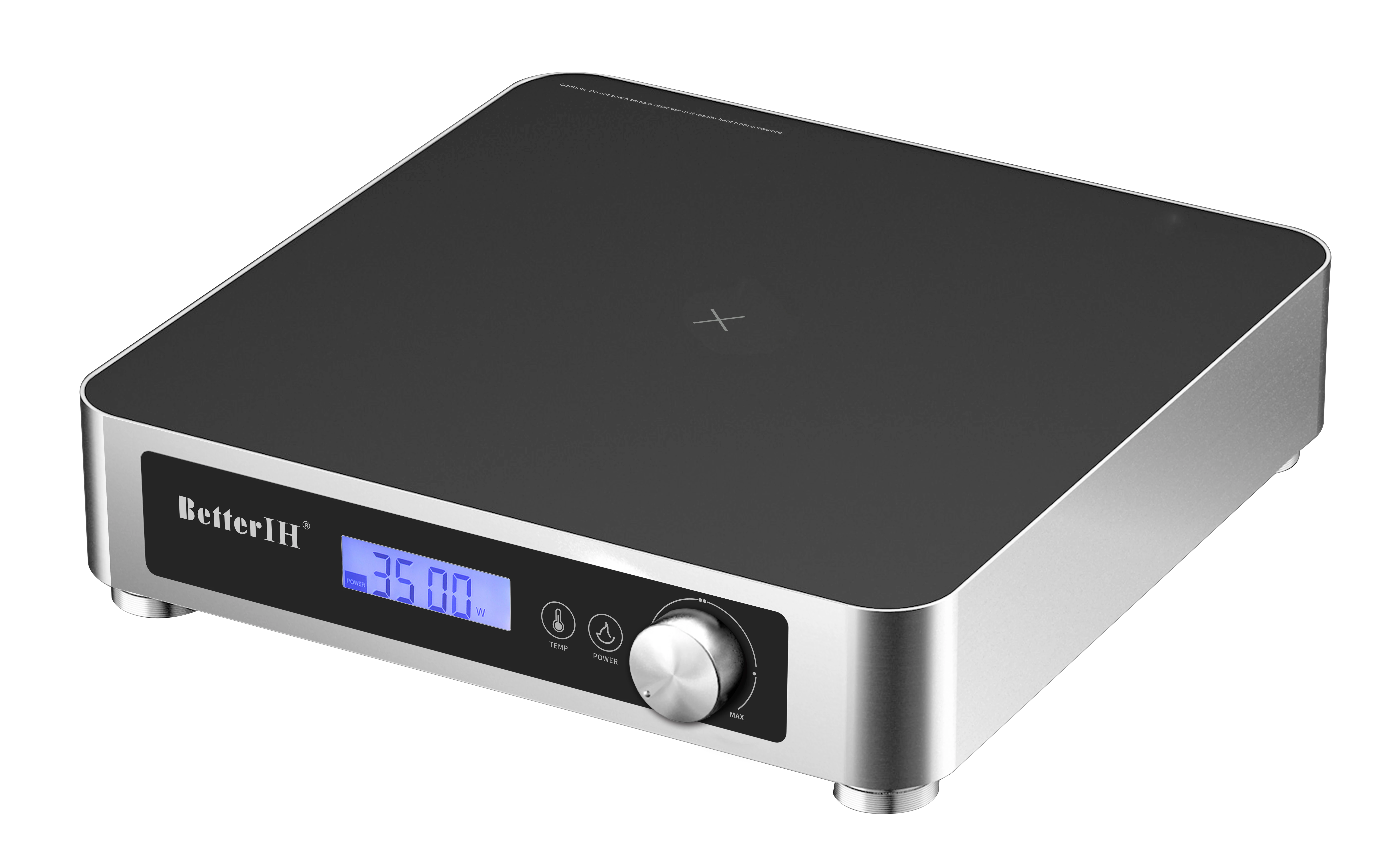
For example, the BE350A from Better Induction uses a stainless steel body and provides glass hob options that include Schott Ceran and Eurokera France hob. Its touch control works with an LCD display, while a knob is used to adjust power or temperature. Electronic overheating protection is also included in the listed product features.
Cookware and Electrical Supply Need Early Attention
Switching from gas to induction requires more than replacing one appliance with another. Induction needs cookware with suitable magnetic properties. Existing pans should therefore be checked before a restaurant calculates the cost of changing equipment.
Electrical infrastructure is another consideration. Restaurants need to compare equipment requirements with the available electrical supply at the installation site. This is particularly important when several induction appliances will operate at the same time.
Before purchasing a commercial induction cooker, operators should also consider counter dimensions, cooking capacity, control layout, cleaning access, and the way staff move between stations. These practical details can have a greater effect on daily use than appearance alone.
Expansion Is Changing How Restaurants Plan Their Kitchens
For a single restaurant, choosing one appliance may be relatively straightforward. Restaurant groups, hotel operators, and kitchen-equipment brands face another issue. They may need several equipment formats for different locations while trying to maintain similar cooking procedures.
This creates demand for products that can be developed around different installation and operating requirements. Better Induction has worked with induction kitchen appliances since 1999 and mainly provides ODM and OEM services. They cover design, R&D, and manufacturing, with products including induction cookers, woks, fryers, pasta cookers, catering trolleys, and cooking islands.
Such manufacturing arrangements are particularly relevant when restaurant or kitchen-equipment projects require specific product forms or functions. Specifications still need to be confirmed according to each project and target market.
When Does Switching to Induction Make Sense?
A restaurant benefits from changing its cooking equipment only when the new setup matches its actual operation. The decision should begin with the menu, followed by cookware compatibility, electrical capacity, ventilation, station layout, cleaning routines, and staff working habits.
The wider adoption of commercial induction cooking equipment is therefore tied to practical kitchen needs. Rapid heat adjustment can suit fast service, direct heating can reduce wasted heat around cooking stations, and different equipment formats give restaurants more layout choices. For operators considering a change, testing these factors against real cooking tasks provides a clearer answer than choosing equipment based only on the type of heat source.
