
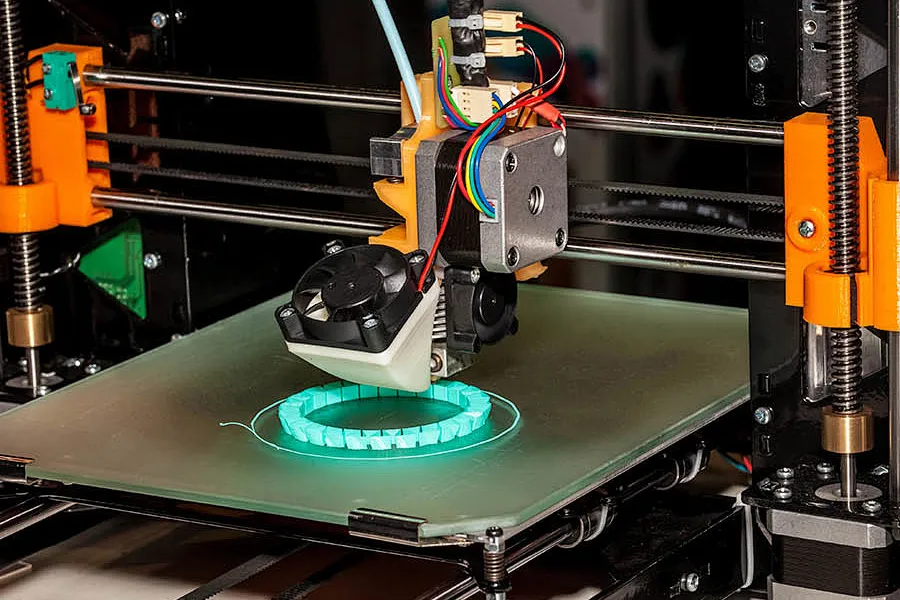
3D printing OEMs face a demanding combination of thermal control, product reliability, integration requirements, and cost management. For equipment manufacturers developing enclosed printers, chamber temperature is not simply an accessory feature. It can influence print consistency, material behavior, and the overall value of the finished machine. That makes the choice of heating-component supplier strategically important. Working directly with a 3D printer chamber heater factory can give OEMs closer technical communication, more flexible customization, and better visibility into production and quality control.
Why Chamber Temperature Matters in 3D Printing
A stable chamber environment can help reduce temperature-related printing problems, particularly when processing materials that are sensitive to cooling and thermal changes. Uneven conditions may contribute to warping, poor layer adhesion, or dimensional inconsistencies. A controlled chamber helps create a more consistent environment around the printed part, supporting more predictable results.
For OEMs, this means chamber heating should be considered as part of the printer’s thermal architecture rather than an isolated component. Heater output, installation position, airflow, enclosure dimensions, and operating conditions all need to work together. A supplier that understands the heating component itself can therefore contribute more effectively during equipment development.
Why PTC Technology Fits Chamber Heating
PTC heating technology has a useful characteristic for enclosed 3D printer applications: its electrical behavior changes with temperature. As temperature rises, the PTC element naturally reduces power output. This self-regulating behavior can support stable heating while reducing reliance on complicated external control arrangements.
The benefit is particularly relevant for OEM engineers seeking a heating solution that balances performance and safety. PTC heaters are designed to regulate their power according to temperature changes, helping maintain consistent heating performance. The manufacturer’s current product information also identifies reduced overheating risk as one of the technology’s advantages.
Why Buying from a 3D Printer Chamber Heater Factory Matters
Direct factory cooperation can shorten the communication path between an OEM’s engineering team and the people responsible for developing the heater. Instead of adapting a generic component to fit a printer, buyers can discuss required voltage, wattage, dimensions, mounting arrangements, and other application conditions directly with the manufacturer.
This becomes increasingly valuable when an OEM is preparing a new printer platform or modifying an existing model. Because according to the manufacturer’s published process, custom heater development can begin with requirements or drawings, followed by design, quotation, prototype production, testing, and mass production.
Customization Can Support Better Mechanical Integration
Space is often limited inside a 3D printer enclosure. A heater that performs adequately but occupies the wrong area can create problems for airflow, wiring, assembly, or maintenance. Direct communication with a factory allows OEM teams to discuss dimensional and installation requirements before production begins.
The manufacturer states that its PTC heater solutions can be customized in voltage, wattage, dimensions, and mounting across different heater types. This flexibility can help equipment designers develop heating modules around the printer rather than redesigning the printer around an inflexible off-the-shelf heater.
Production Control Is Important for OEM Programs
A component may work well in a prototype but still need consistent performance when an OEM moves into volume production. This is where factory-level manufacturing capabilities become important. Buyers need confidence that the same design can be reproduced according to the agreed specifications over successive production batches.
The manufacturer’s published production process includes PTC screening and pairing, wire processing, assembly, compression molding, surface-temperature testing, electrical-performance testing, and final stamping and packaging. Such defined production stages can give OEM purchasing and engineering teams a clearer framework for evaluating component quality.
Direct Cooperation Can Improve Development Efficiency
OEM projects often involve multiple revisions before the final product enters production. A direct factory relationship can make these iterations easier to manage because technical questions, sample changes, and production requirements can be communicated without unnecessary intermediaries.
For example, the manufacturer reports a sample-production period of 3–7 days, while mass production is generally listed at 15–20 days depending on quantity and specifications. Custom products are also described as supporting prototype testing before volume production. These capabilities can be useful when an OEM needs to validate thermal performance before committing to a larger order.
What OEMs Should Evaluate Before Choosing a Supplier
Price should not be the only criterion when selecting a heating-component partner. OEM buyers should examine whether the supplier can support engineering customization, provide appropriate testing, maintain production consistency, and communicate clearly about technical specifications.
It is also worth checking whether the supplier has experience with the intended application. A manufacturer that already identifies 3D printer chamber heating among its application areas may have a stronger understanding of the thermal requirements. The supplier’s product portfolio includes insulated PTC air heaters, conductive PTC air heaters, fan heaters, aluminum shell heaters, flexible PTC heaters, and other heating solutions.
A More Strategic Approach to Heater Sourcing
For 3D printer OEMs, the heater is a relatively small component with an outsized influence on the thermal environment. Selecting the right technology and supplier can therefore affect more than component cost. It can influence integration effort, product reliability, development speed, and the ability to adapt the printer to different configurations.
A direct relationship with a capable 3D printer chamber heater factory gives OEMs an opportunity to address these factors earlier in the development process. Rather than treating heating as a commodity purchase, buyers can approach it as an engineering partnership.
Building a More Reliable OEM Heating Strategy
PTCYIDU, the brand operated by Shanghai Yidu Electronics, focuses on PTC heating products for OEM customers and has developed solutions for 3D printer chamber heating. The company states that it was founded in 2002, operates a 20,000 m² factory, and has a 20-person engineering team supporting custom heater development from drawing review and prototyping through volume production.
For OEMs evaluating a long-term heating partner, this combination of PTC self-regulation, customization, engineering support, and manufacturing capability provides a practical basis for assessing whether a direct factory relationship can support their next-generation 3D printer projects.
