
For a growing brand, deciding between standard textiles and a customized textile program often comes down to one question: will the additional investment create enough value to justify the cost? The answer depends on how customization supports the product’s purpose, target market, and sales strategy.
Instead of comparing unit prices alone, businesses should consider differentiation, brand visibility, functionality, and the potential return generated by a more distinctive finished product.
What Makes Custom Designed Fabric More Expensive?
Custom Designed Fabric can involve more specifications than an off-the-shelf textile. Depending on the product, businesses may need to determine the material, dimensions, colors, artwork, printing method, packaging, and other details. Each decision can affect production requirements and therefore the overall project cost.
The important point is that customization should serve a clear purpose. Paying more simply to make a product look different may not provide enough value. A customized textile becomes more commercially useful when the design improves brand recognition, supports a particular customer experience, or helps the product stand out in a crowded category.
Evaluating the Value of Custom Textiles
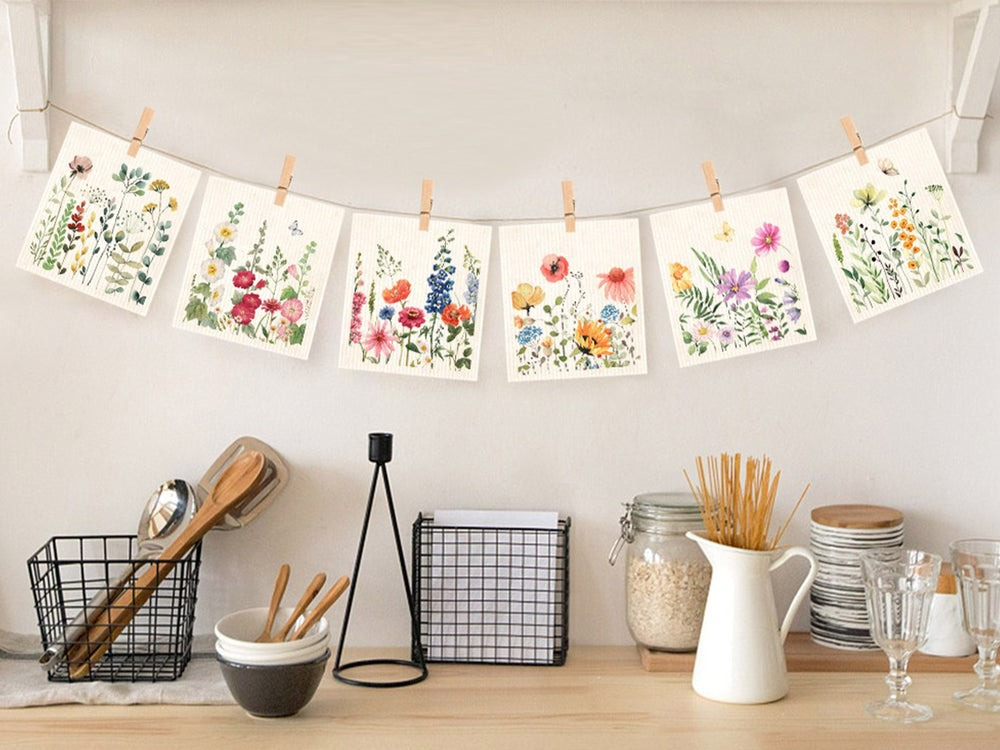
Custom textiles can add value when the textile itself becomes part of the customer’s interaction with the brand. A tote bag, tea towel, blanket, or dishcloth can carry a visual identity through colors, patterns, artwork, or logos instead of functioning as a generic item.
This is particularly relevant for retailers, lifestyle brands, hospitality businesses, promotional campaigns, and companies developing branded merchandise. A useful textile may continue to provide brand exposure after the original purchase or event, making its value different from that of a disposable promotional item.
The product category also matters. A textile designed for repeated everyday use may offer more long-term value than a customized product that customers rarely use.
Consider Quantity, Specifications, and Intended Use
Quantity is another important part of the cost-versus-value calculation. The minimum order quantity (MOQ) determines how much inventory a business must commit to at the beginning of a project. A lower MOQ can make smaller production runs more manageable, particularly for new collections or limited campaigns.
The manufacturer states that its broader custom textile service has MOQs ranging from 50 to 1,000+ units, depending on the product and customization requirements. Its website also lists examples such as a custom flat canvas tote with a minimum of 50 units and several other tote configurations beginning at 100 units.
These numbers should not be treated as universal pricing or ordering rules. Businesses should confirm the MOQ for the exact product, material, dimensions, and customization requested.
How Can Customization Strengthen Brand Differentiation?
Customization is most valuable when it helps a business communicate something that a standard product cannot. Consistent colors and patterns can reinforce visual identity, while custom packaging or branded artwork can connect a physical product more closely with the rest of a product line.
The manufacturing service covers customization across areas such as materials, colors, sizes, patterns, logos, packaging, and functional details. This flexibility can be useful when a business needs a textile designed around a specific brand concept rather than adapting an existing generic item.
For example, the supplier currently offers custom textile categories including Swedish dishcloths, tea towels, tote bags, blankets, beach towels, kitchen sets, and beach ponchos. The variety allows businesses to select a product according to its intended application instead of forcing every project into the same format.
Where Does ROI Come Into the Decision?
Return on Investment (ROI) should be considered alongside production cost. In this context, the investment is not only the manufacturing expense. It can also include design preparation, samples, packaging, shipping, and the inventory commitment required for the project.
The potential return may come through several channels. A customized textile may support a higher perceived product value, strengthen a branded merchandise program, improve consistency across a product collection, or give customers a practical item that keeps the brand visible.
However, ROI depends on actual business performance. A well-designed product with weak demand may not generate enough value, while a relatively simple customization can be worthwhile when it directly supports a successful product or campaign.
Make the Investment Decision Based on Purpose
Custom designed fabric is generally easier to justify when the customization solves a recognizable business problem. That might mean creating a distinctive retail product, strengthening visual branding, developing a themed collection, or producing practical merchandise for a specific audience.
An effective approach is to define the objective before selecting materials, dimensions, design details, and order quantity. Compare the expected business value with the total project cost rather than focusing on the per-unit figure in isolation.
For smaller brands, the ability to order at lower quantities can also make customization more approachable. The key is not to customize every textile, but to invest where the design contributes meaningful value.
A supplier offering flexible customization and a broad textile range can support this approach. As a wholesale textile partner, Bulijojo keeps minimum orders low enough for small and growing brands while covering several everyday product categories.
