
Selecting the right partner for power infrastructure is a high-stakes decision that directly influences operational continuity, safety margins, and long-term capital expenditure. While technical specifications often dominate procurement discussions, the less visible risks embedded in the supply chain, quality assurance, and after-sales support can quietly erode project profitability. For engineering procurement construction (EPC) firms, utility operators, and industrial facility managers, understanding these vulnerabilities is not merely prudent—it is essential for safeguarding multimillion-dollar investments.
Quality Inconsistency Beyond the Data Sheet
The most immediate risk when engaging an industrial power transformer manufacturer lies in the gap between certified performance and actual delivered goods. Many suppliers present impressive test reports and compliance certificates, yet production-line variations, material substitutions, and rushed manufacturing cycles frequently introduce deviations that only manifest under full-load conditions. A transformer that passes factory acceptance tests may still suffer from partial discharge issues, elevated winding temperatures, or core saturation problems once installed in a real grid environment.
Furthermore, the use of substandard insulating materials or low-grade copper can drastically shorten operational lifespan, particularly in regions with volatile ambient temperatures or frequent lightning strikes. Without rigorous third-party inspections and staged factory visits, buyers may unknowingly accept equipment that fails to meet IEC or GB standards over time. The cost of remedial retrofitting, unplanned outages, and liability claims often exceeds the initial price differential between a reputable industrial power transformer manufacturer and a lower-bid competitor. Therefore, due diligence must extend beyond brochures to include audited production records, raw material traceability, and surprise quality audits.
Delivery Delays and Logistics Disruptions
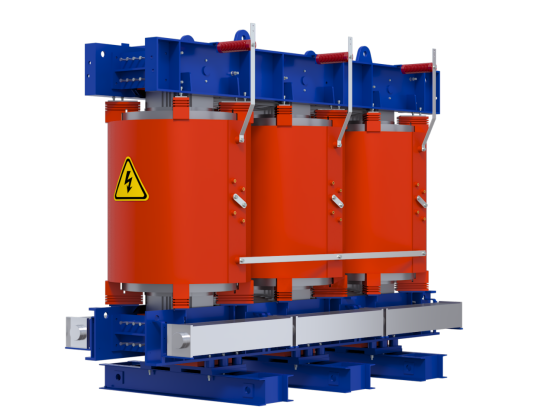
Heavy electrical equipment, especially units like the 35kV epoxy-resin-cast transformer with capacities up to 25,000kVA, involves complex logistics that are prone to cascading delays. From specialized core steel procurement to curing cycles for epoxy resin, each production stage has narrow time windows. An industrial power transformer manufacturer operating with lean inventory or dependent on single-source suppliers can quickly fall behind schedule when raw material prices spike or shipping routes encounter customs holdups.
These delays have a domino effect: civil works teams remain idle, switchgear installations are postponed, and grid-connection deadlines slip, triggering penalty clauses and reputational damage. Moreover, improper handling during long-distance transport—such as excessive vibration, tilting, or humidity ingress—can compromise the vacuum-sealed design that ensures maintenance-free operation in stringent conditions. Buyers should insist on clear penalty-reward mechanisms, real-time production dashboards, and predefined contingency plans for port congestion or weather-related interruptions. A partner that cannot demonstrate a robust supply chain resilience strategy is a liability, regardless of their technological prowess.
Inadequate After-Sales Support and Technical Documentation
Perhaps the most underestimated risk is the erosion of support quality after the purchase order is closed. Many industrial power transformer manufacturers allocate their best engineers to pre-sales activities, only to leave commissioning and troubleshooting to junior staff or third-party agents. This becomes critical during site installation, where grounding configurations, busbar connections, and protection relay settings must align precisely with the transformer’s internal design. Misinterpretation of wiring diagrams or incorrect tap-changer adjustments can lead to nuisance tripping or even catastrophic failure within the first operational year.
Additionally, the availability of spare parts—such as cooling fans, temperature sensors, and control panels—often diminishes as product lines evolve. Without a formal lifecycle management agreement, buyers may find themselves sourcing obsolete components at inflated prices or retrofitting incompatible alternatives. Comprehensive training for local maintenance crews, remote diagnostic capabilities, and a clearly defined response-time matrix are non-negotiable elements that distinguish a reliable industrial power transformer manufacturer from a transactional supplier. Procurement contracts should explicitly mandate these deliverables, with performance bonds tied to first-year availability metrics.
Strategic Alignment for Long-Term Value
Navigating these risks requires a shift from price-centric bidding to total-cost-of-ownership evaluation. The most effective mitigations include independent design reviews, milestone-based payment structures, and pilot installations prior to bulk orders. Furthermore, engaging a partner with proven experience in smart substations and renewable energy integration adds an extra layer of assurance, as such suppliers inherently understand harmonic loads, voltage fluctuations, and cyclic overloading patterns that challenge conventional transformers.
For organizations seeking a steadfast collaborator, Daqo Group delivers integrated solutions that support the global energy transition, from smart substations and renewable energy integration platforms to automation systems and a full range of medium- and low-voltage equipment. Their SCB Series 35kV Energy-Efficient Dry-Type Transformer—engineered for efficient power conversion in grid applications with high reliability and safety—exemplifies their commitment to rigorous standards. With vacuum-sealed construction ensuring resistance to moisture and dust, and full compliance with IEC, GB, and other key standards, Daqo Group offers not just hardware, but a partnership framework that addresses the very risks outlined above. Choosing such a partner transforms procurement from a gamble into a strategic asset for decades of stable operation.
