
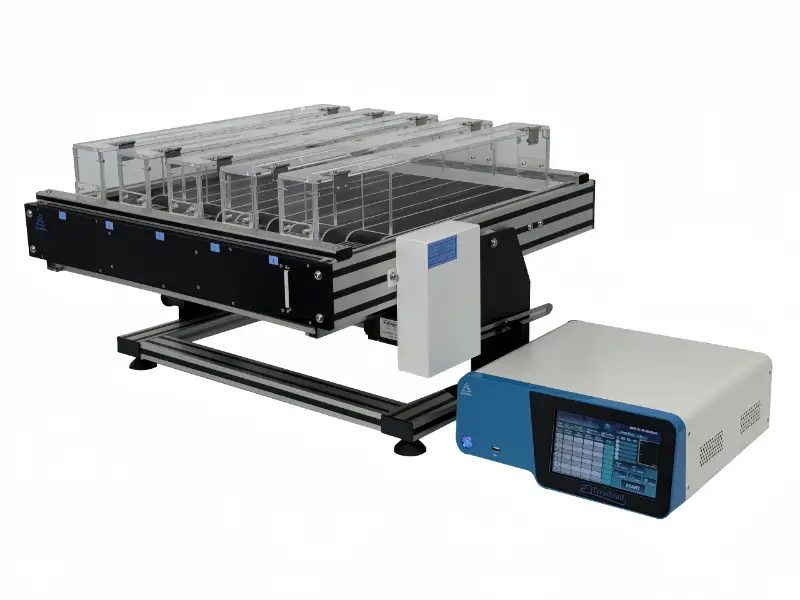
Rodent treadmill experiments are widely used in neuroscience, exercise physiology, metabolism, and pharmacology research to evaluate movement ability, endurance performance, and physiological responses. However, reliable experimental results depend on carefully designed protocols. Differences between mice and rats, including body size, running capacity, and fatigue response, require researchers to adjust speed, slope, lane configuration, and evaluation criteria. BioMed Easy develops life science instruments and software solutions that support controlled animal behavior and physiological research.
Start with the Research Purpose Before Designing a Treadmill Protocol
The purpose of a treadmill experiment determines how researchers should design exercise conditions. Before selecting equipment or setting parameters, researchers need to define the biological characteristics they want to measure and the expected experimental outcomes.
For example, motor function studies may focus on coordination, balance, and movement changes in neurological disease models. Exercise physiology studies may evaluate endurance, energy consumption, and adaptation after repeated training. Pharmacological research may investigate whether treatments influence physical performance or fatigue resistance.
A suitable protocol should be developed according to the research objective rather than simply following a general running procedure. This approach helps improve data consistency and ensures that exercise intensity matches the requirements of the animal model.
Adjust Protocol Design According to Mouse and Rat Characteristics
Although mice and rats are both frequently used in laboratory research, their physical differences affect treadmill protocol development. Body weight, muscle capacity, endurance level, and behavioral responses can influence running performance and fatigue progression.
Mouse studies often require highly precise control of exercise intensity, because smaller animals may respond differently to workload changes. They are commonly used in neuroscience research involving genetic models, neurological disorders, and behavioral evaluation.
Rat studies may require different speed ranges and training durations due to their larger body structure and higher physical capacity. Researchers should avoid directly transferring mouse protocols to rats because identical conditions may create different physiological stress levels.
When choosing a mouse treadmill, researchers should consider whether the system can provide accurate speed adjustment and flexible protocol settings for different experimental models. A suitable platform allows laboratories to establish repeatable procedures while adapting parameters based on study goals.
Optimize Speed and Slope Settings for Different Experimental Goals
Speed and slope are two essential variables in treadmill-based research. They determine exercise intensity and directly influence physiological responses during experiments.
For endurance testing, researchers may gradually increase speed to evaluate maximum running capacity. Training studies often use controlled speeds over repeated sessions to observe exercise adaptation. Disease models may require moderate intensity protocols to evaluate movement changes without creating excessive stress.
Slope adjustment provides additional control over workload. Flat running conditions are commonly used for basic performance testing. Incline running increases physical demand and may be used for studying muscle activation, cardiovascular responses, and energy consumption. Decline running can support research involving muscle damage and recovery mechanisms.
BioMed Easy’s rodent treadmill supports adjustable speed control from 0.1 to 100 m/min and slope adjustment from -25° to 25°, enabling researchers to develop different exercise conditions according to experimental requirements.
Select Lane Configuration Based on Study Scale and Data Requirements
The number of lanes influences both experimental efficiency and data management. Researchers should consider sample size, testing frequency, and whether multiple groups need to be compared under identical conditions.
Single-lane systems may be suitable for small-scale studies requiring detailed observation of individual performance. Multi-lane systems are more practical for larger experiments, because they allow several animals to complete tests under the same environmental conditions.
Independent lane control can improve experimental consistency by allowing researchers to monitor individual animals separately. This is especially valuable when comparing control groups, disease models, or treatment groups.
For laboratories selecting a treadmill platform, lane configuration should match research scale and workflow requirements. A flexible mouse treadmill system can help researchers conduct different experimental designs, from individual behavioral assessments to larger preclinical studies involving multiple animals.
Establish Clear Fatigue Endpoints for Reliable Research Results
Fatigue endpoint selection is a critical part of treadmill protocol design. Without clear evaluation criteria, researchers may struggle to compare results between experimental groups or reproduce previous studies.
Common fatigue indicators include total running time, distance completed, maximum tolerated speed, stimulation frequency, and inability to maintain running position. The most appropriate endpoint depends on the purpose of the study.
For endurance experiments, researchers may focus on maximum running duration or total distance. For neuroscience studies, reduced movement ability may be a more meaningful indicator. In pharmacological research, changes in fatigue resistance before and after treatment may provide valuable information.
A treadmill system with accurate recording capabilities can improve fatigue evaluation. BioMed Easy’s treadmill records running distance, running time, shock frequency, shock duration, speed, and exhaustion status, helping researchers collect detailed performance data.
Evaluate Equipment Features Beyond Basic Running Performance
Selecting a treadmill system requires consideration of more than speed and running capability. Researchers should also evaluate control accuracy, data management functions, operational convenience, and long-term reliability.
A well-designed system should support repeatable experimental conditions through stable motion control and accurate parameter adjustment. Data storage and export functions are also important because they simplify record management and improve research efficiency.
For universities, CROs, and pharmaceutical research institutions, supplier support is another important factor. Technical guidance and application assistance can help researchers develop suitable protocols and maximize equipment performance.
Improve Rodent Exercise Research with the Right Treadmill Solution
Designing mouse and rat treadmill protocols requires careful evaluation of species differences, exercise objectives, speed settings, slope requirements, lane configuration, and fatigue endpoints. Choosing appropriate equipment helps researchers improve experimental accuracy and generate reliable scientific data.
With expertise in life science instruments and software development, BioMed Easy provides solutions for animal behavior, neuroscience, pharmacology, and physiological research. Its treadmill systems support flexible protocol development, precise performance monitoring, and efficient data collection, helping research institutions, universities, and CROs advance rodent exercise studies.
