
A commercial water park begins long before guests enter the wave pool or climb a slide tower. Behind the finished attraction is a coordinated process involving market planning, site design, engineering, equipment selection, construction, testing, and operations. For developers and investors, understanding this journey helps control project risks and create facilities that combine guest appeal with practical operating requirements. Jinchao, a professional water slide builder, provides custom slides for commercial water parks, resorts, and aquatic attractions worldwide.
From Business Concept to Initial Blueprint
Every successful water park starts with a clear business concept. Developers typically need to define the target market, expected visitor profile, attraction mix, available site area, operating season, and investment objectives before detailed design begins.
These decisions influence the overall layout. A family-oriented facility may prioritize children’s play areas and moderate attractions, while a destination resort may require signature thrill rides capable of becoming visual landmarks. The blueprint therefore needs to connect commercial objectives with guest circulation, capacity, service areas, and operational requirements.
Site Planning Shapes the Entire Facility
Site conditions can determine how efficiently an attraction can be incorporated into a park. Designers need to account for available land, elevation changes, access routes, utilities, drainage, buildings, pools, and supporting infrastructure.
Water slides are not standalone decorative structures. ASTM F2376-24 defines a water slide system as including the flume, water-circulation system, starting platform and access, structural supports, vehicles or aquatic accessories where applicable, and slide termination.
Consequently, commercial water park construction requires coordination among architects, structural engineers, mechanical teams, equipment manufacturers, contractors, and operators. Early communication can help identify conflicts before installation begins.
Selecting Attractions for Capacity and Experience
Attraction selection is both an experiential and operational decision. Developers need rides that match the intended audience while also supporting the expected visitor volume. A ride with strong visual appeal may have limited value if its throughput does not fit the park’s overall capacity strategy.
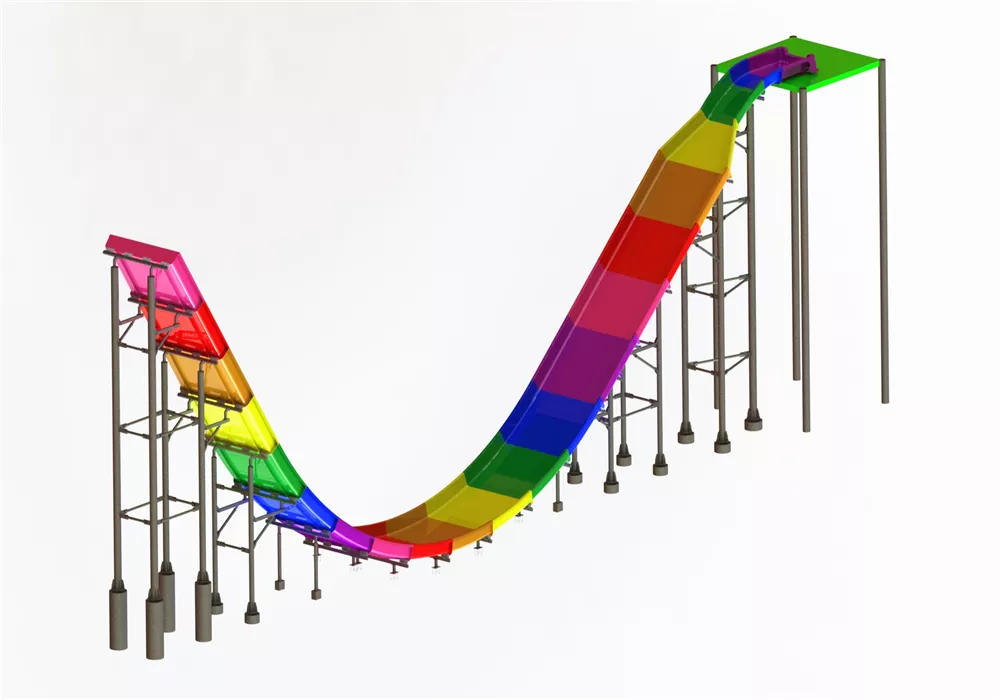
Jinchao’s U-shaped slide illustrates how specific equipment parameters can inform planning. The product is listed with a starting height of 8–12 m and capacity for two persons per lane. Its approximate hourly capacity is 200–300 persons per hour.
How a U-Shaped Slide Works
The U-shaped slide is designed around a distinctive rise-and-fall motion. Riders travel through the curved slide before being carried upward along a steep wall by water flow, gravity, and remaining inertia. As the raft reaches a higher point, its speed decreases before gravity brings it back toward the lower section.
This motion produces a combination of acceleration, suspense, and weightless sensation. For operators, the attraction can provide a recognizable thrill feature within a broader ride portfolio. Its two-person-per-lane configuration also creates a defined operating pattern for guest dispatch.
Engineering and Safety Come Before Installation
The engineering stage converts a concept into a buildable attraction. Structural support requirements, water circulation, access, rider movement, slide geometry, and termination areas all need to be addressed through appropriate technical documentation.
ASTM F2376-24 applies to the classification, design, manufacture, construction, auditing, major modification, and operation of water slide systems. The standard also states that owner and operator requirements apply regardless of when a system was constructed.
The water park construction process therefore extends beyond assembling slide sections. Project teams need to coordinate technical reviews, applicable local requirements, installation procedures, inspections, and operational planning.
Manufacturing Turns Drawings into Equipment
Once engineering requirements are established, manufacturing transforms approved designs into physical components. For custom water slides, communication between the equipment builder and project team becomes particularly important because dimensions, site conditions, structural interfaces, and attraction positioning may differ from one project to another.
A supplier such as Jinchao can be involved in providing custom water slide solutions for different aquatic facilities. Buyers should establish the equipment scope, technical drawings, materials, dimensions, delivery schedule, installation responsibilities, and documentation before manufacturing proceeds.
Installation Connects Equipment with Infrastructure
The installation phase brings the attraction together with the wider facility. Foundations, structural supports, water systems, electrical services, access platforms, pools, and surrounding guest areas must work as an integrated system.
This is why water park project development cannot treat equipment procurement as an isolated purchasing activity. The selected slide needs to fit the approved site plan and coordinate with construction schedules. Clear interfaces between the slide manufacturer, general contractor, engineering teams, and facility owner can help reduce delays and costly modifications.
Testing and Operational Readiness
A completed attraction still needs to move through commissioning and operational preparation before welcoming guests. Project teams should verify that equipment, water systems, access arrangements, and operating procedures function as intended and satisfy applicable requirements.
Operators also need procedures for staffing, dispatching riders, inspections, maintenance, emergency response, and daily operation. ASTM identifies operation as part of the water slide system lifecycle rather than something separate from design and construction.
Turning the Blueprint into a Long-Term Asset
The final stage is not simply opening day. A water park must continue delivering a reliable guest experience while managing maintenance, inspections, staffing, capacity, and changing visitor expectations.
For buyers, the most useful approach is to evaluate each attraction as part of the complete facility. The right combination of site planning, engineering, equipment selection, installation, and operational preparation can turn a blueprint into a practical destination.
As a water park manufacturer, Jinchao’s U-shaped slide offers one example of how defined ride parameters can support this planning. With a 8-12 m starting height, two-person-per-lane capacity, and approximate throughput of 200–300 persons per hour, it can be evaluated against a project’s space, audience, and operational objectives.
From the first concept drawing to the first rider’s splash, successful water parks depend on coordinated decisions rather than a single construction step. Developers who connect commercial goals with engineering, safety, capacity, and supplier coordination can establish a stronger foundation for long-term attraction performance. For projects requiring custom water slides, experienced manufacturers such as Jinchao can form an important part of that development chain.
