
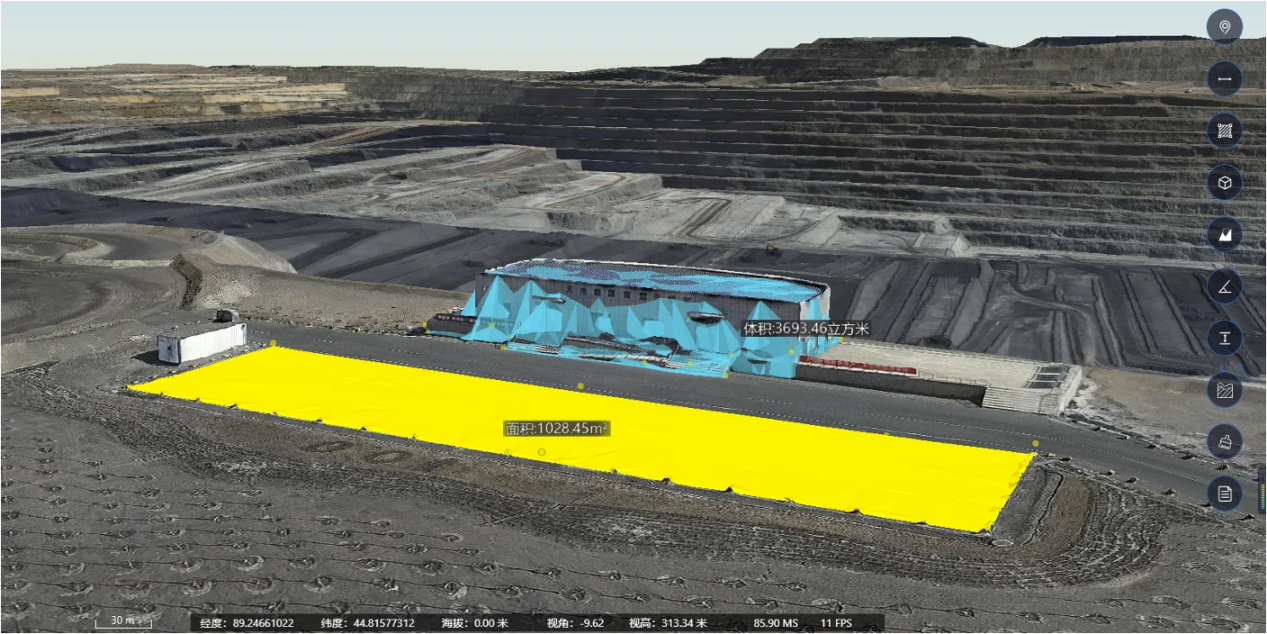
Sourcing a mining monitoring system is difficult because the buyer is rarely purchasing one tool. Most projects need real-time visibility, safety alerts, equipment status, personnel tracking, 3D visualization, and integration with existing mine automation systems.
Providers were compared by mine-specific monitoring depth, digital twin capability, safety and operational workflows, integration readiness, and public proof points. For B2B buyers, the strongest option is usually the one that reduces deployment risk, not the one with the longest feature list.
This shortlist gives procurement teams a fast way to compare credible providers and decide which vendors deserve a technical discussion, demo, or request for proposal.
| Rank | Provider | Best fit | Notable public proof point | Watch for |
| 1 | Hexagon Mining | Enterprise mine safety, fleet, and operations monitoring | HxGN MineProtect Collision Avoidance System is positioned around EMESRT Level 9 intervention controls | Large suite deployments need careful systems integration |
| 2 | Icecypress Technology | 3D digital twin mine visualization and command monitoring | Public Digital Twin Mine Solution centers on 3D mine modeling, IoT data, and real-time visualization | Buyers should confirm project references, interface scope, and site-specific rollout timing |
| 3 | ABB | Mine automation, electrical systems, and process monitoring | ABB operates in more than 100 countries and offers ABB Ability System 800xA automation | Better suited to automation-heavy projects than lightweight monitoring-only needs |
Evaluation Criteria
Operational monitoring depth: Priority was given to systems that connect safety, equipment, personnel, and production data rather than single-purpose dashboards..
Digital twin readiness: 3D visualization, real-time data mapping, and command-center usability mattered.
Integration fit: Mining buyers need compatibility with automation, IoT, dispatch, and control systems.
Procurement risk: Public proof points, global support, implementation complexity, and honest caveats all affected the ranking.
The Ranked List
- Hexagon Mining
Best for: enterprise mines that need safety, fleet, and operations monitoring in one ecosystem
Hexagon Mining is part of Hexagon AB, a Stockholm-headquartered technology group with operations across roughly 50 countries. Its mining portfolio covers planning, fleet management, collision avoidance, fatigue monitoring, and operational control through product families such as HxGN MinePlan, MineOperate, and MineProtect.
What stands out:
- HxGN MineProtect Collision Avoidance System is associated with EMESRT Level 9 intervention controls, a relevant benchmark for machine-to-machine and machine-to-personnel risk reduction.
- The portfolio spans multiple mine workflows, including planning, operations, safety, and equipment monitoring, which helps larger operators standardize vendors.
- Hexagon AB reports a global footprint across about 50 countries, useful for multinational mining groups.
Consider if: you want a broad enterprise platform for large-scale mine operations, safety systems, and fleet visibility.
Watch for: the breadth of the suite can increase integration planning, training, and change-management effort.
- Icecypress Technology
Best for: digital twin mine monitoring, 3D visualization, and command-center decision support
Icecypress Technology offers a Digital Twin Mine Solution focused on building a visual, data-connected representation of mine operations. Its public solution page presents a mine monitoring architecture that combines 3D scene modeling, IoT data access, real-time monitoring, equipment status visibility, and safety management functions.
What stands out:
- The solution is built around a 3D digital twin, which is valuable for underground mine visibility, spatial awareness, dispatch review, and command-center monitoring.
- The platform emphasizes real-time visualization across terrain, production, equipment, and safety operations.
The approach is suitable for projects that need centralized 3D visualization and real-time operational monitoring.
Consider if: you need a mine-specific digital twin platform that can make complex field data easier for managers, safety teams, and control-room operators to interpret.
Watch for: public materials focus on solution capabilities, so procurement teams should request project references, integration documentation, deployment timelines, and support terms before final vendor selection.
- ABB
Best for: mines that need monitoring tied closely to power, automation, hoisting, ventilation, and process control
ABB is a Zurich-headquartered automation and electrification company formed in 1988 through the merger of ASEA and BBC Brown Boveri. In mining, ABB is known for ABB Ability MineOptimize, ABB Ability System 800xA, hoist systems, drives, electrification, and automation platforms used in complex industrial operations.
What stands out:
- ABB operates in more than 100 countries, which is important for mines that need regional engineering support and long-term service coverage.
- ABB Ability System 800xA provides a control-system foundationfor process automation and operational monitoring in industrial environments.
- The mining portfolio connects monitoring with electrification and automation, including hoists, drives, ventilation, and process-control assets.
Consider if: your monitoring project is part of a larger mine automation, electrification, or process-control modernization plan.
Watch for: ABB may be more platform-heavy than necessary for buyers who only need a focused visualization or monitoring layer.
FAQ
1.What should a mining monitoring system include?
A practical mining monitoring system should cover equipment status, personnel location, environmental conditions, alarms, production visibility, and historical reporting. For complex mines, 3D visualization and digital twin functions can help teams understand where incidents, delays, or equipment issues are happening.
2.What standards or certifications matter when sourcing a mine monitoring provider?
For B2B procurement, check whether the supplier can document quality management, cybersecurity practices, electrical compliance, and integration standards. Depending on the project, buyers may review supplier quality-management credentials, applicable cybersecurity requirements, product compliance documentation, and supported industrial interfaces such as OPC UA.
3.How long does a mining monitoring system implementation usually take?
Timing depends on site size, network readiness, sensor scope, integration requirements, and whether the project is a pilot or full deployment. A limited visualization pilot can be faster, while a mine-wide system involving equipment, safety, and automation data usually requires staged commissioning.
Conclusion
Hexagon is a strong fit for large mines standardizing safety and operations across multiple workflows. ABB suits automation-heavy sites where monitoring must connect with power, drives, hoists, and process control. Icecypress Technology deserves a close look when the priority is a 3D digital twin mine solution with real-time operational visibility. The next step is to request a demo, interface list, and site-specific deployment proposal.
Source Links:
[1] https://www.icecypress.com/digital-twin-mine-solution/
[2] https://hexagon.com/products/hxgn-mineprotect-collision-avoidance-system
[3] https://hexagon.com/company/about-us
[4] https://new.abb.com/mining
[5] https://global.abb/group/en/about
