
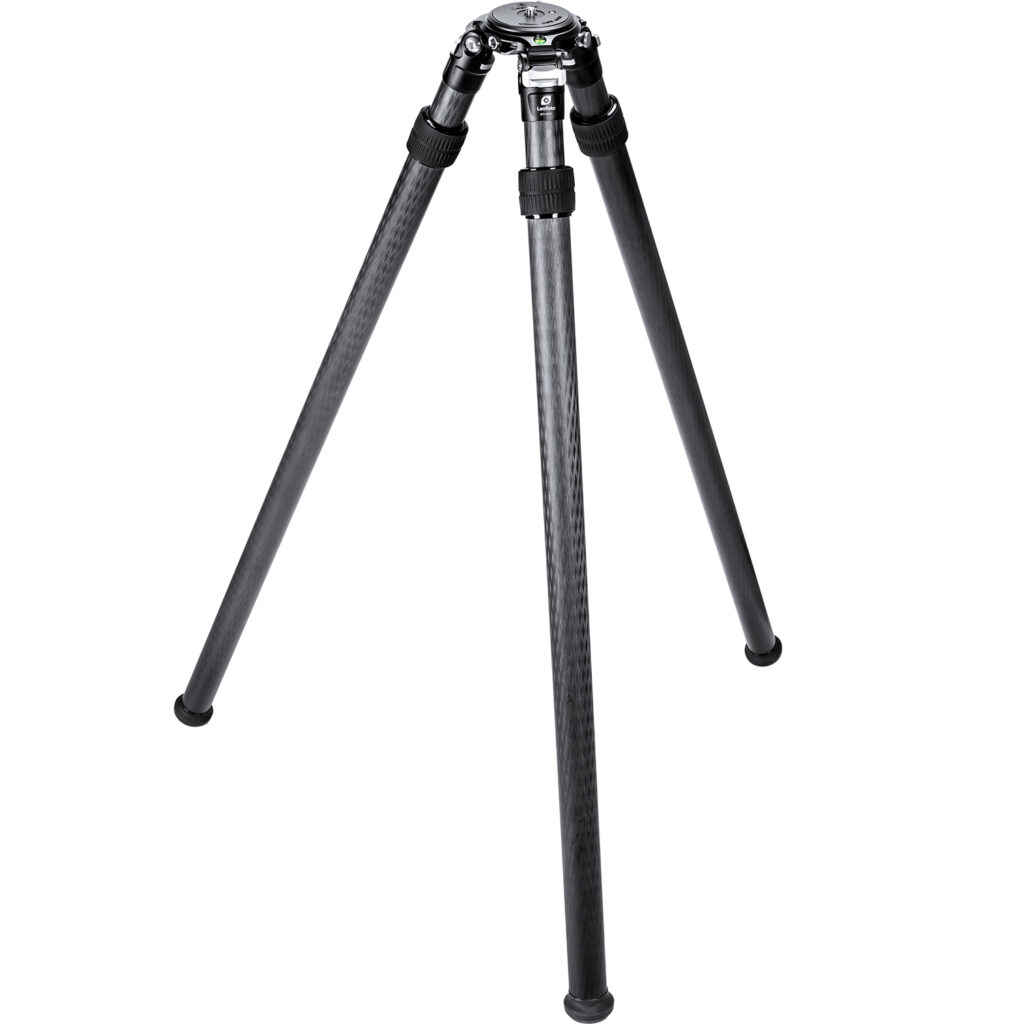
Precision optical platforms demand support structures that withstand vertical compression and lateral deflection forces. Equipment stability depends directly on mechanical interplay between composite leg construction and central chassis geometry. Understanding these physical elements clarifies how heavy-duty support systems isolate mounted optics from severe vibrations.
Opting for a heavy-duty carbon-fiber tripod establishes an advantageous strength-to-weight baseline for demanding field operations. Achieving dependable optical stability requires more than merely fastening carbon tubes to a generic mount. Torsional rigidity arises from microscopic fiber alignment within each leg and structural resistance across the apex.
Structural Dynamics of Multi-Layer Toray Leg Tubing
Carbon fiber composites derive their load-bearing properties from the chemical grade and geometric orientation of individual filaments. Toray carbon weaves incorporate cross-directional plies arranged across multiple axes to balance axial stiffness with hoop strength. Multi-layered layouts prevent tube walls from ovalizing under downward pressure.
Dampening high-frequency oscillation requires deliberate fiber orientation rather than simply piling on material thickness. Cross-ply layers absorb kinetic energy through micro-shear displacement occurring between the resin matrix and carbon strands. Energy created by wind or shutter operation dissipates before traveling up to mounted cameras or optics.
Engineering practices from Leofoto demonstrate this principle by utilizing ten layers of Toray carbon weave across wide-diameter leg segments. Ten-layer cross-weaving produces a rigid column capable of handling heavy static payloads. Resisting torsional twisting along the leg column keeps targeting axes stable during field observations.
Deploying a purpose-built carbon-fiber hunting tripod reveals how tube diameter complements advanced composite layering. Employing a 36 mm top tube alongside a 32 mm secondary section provides substantial resistance against lateral bending. Wide tube profiles produce elevated moments of inertia, keeping structural deflection minimal when resting heavy equipment.
Apex Machining and Torsional Deflection Control
Every tripod leg converges at the central apex, establishing this component as the mechanical foundation of the complete system. While composite legs absorb vertical loads, the apex assembly must withstand rotational vectors and twisting moments. Mechanical deflection within the central chassis compromises structural stability regardless of tube quality.
Machining components from solid aircraft-grade 6061-T6 aluminum provides the structural density needed to prevent chassis flex. Computer numerical control milling carves out high-stress structural profiles while removing excess material from non-load-bearing areas. The resulting metal chassis exhibits uniform grain consistency that resists fatigue over years of field use.
Apex architecture designed by Leofoto incorporates a 75 mm platform diameter to widen the base for mounted gear. Expanding this upper platform distributes downward loads across a wider plane, reducing localized stress points near the central stud. Broader apex geometry also increases separation between upper leg pivot hinges.
Evaluating an elite carbon-fiber tripod requires examining the precise tolerances machined into primary hinge points. Loose clearances between leg clevises and the central chassis introduce play that disrupts optical tracking. Tight pivot tolerances maintain positive contact across the hinge, preventing lateral shift without binding.
Force Transmission Across Modular Junctions
System rigidity depends directly on the mechanical security of hardware connecting individual leg tubes together. Ergonomic twist locks equipped with internal shims exert uniform radial pressure across the carbon tube circumference. Applying 360-degree clamping pressure stops tubes from slipping while safeguarding internal composite layers against compression damage.
Reducing the number of extension sections inherently improves overall frame stiffness by removing potential mechanical deflection points. A two-section leg design requires only one locking collar per leg, stiffening the lower support structure. Minimizing mechanical joints also limits internal contamination when operating across muddy, dusty, or sandy terrain.
Mechanical evaluations of platforms like the Leofoto SO-362C highlight how a 40kg load rating pairs with two-section construction to limit frame flex. Supporting substantial camera setups or optic rails requires components that hold static weight without creep. Durable collar threads sustain high clamping forces across varied temperatures.
Chassis versatility expands operational utility without weakening essential load-bearing pathways. An integrated 3/8″-16 stainless steel stud provides direct connection for heavy-duty leveling bases or fluid heads. Complementary 1/4″-20 threaded sockets machined into the apex permit attachment of secondary gear arms without cluttering the primary plate.
Positioning a rugged carbon-fiber hunting tripod over steep embankments requires dependable ground contact interfaces. Dense rubber feet absorb surface vibrations on bedrock, while modular stainless steel spikes penetrate loose dirt or mud. Firm footing anchors lower legs, directing downward pressure straight into the carbon columns.
Stability Verification in High-Stress Field Deployments
Field usability requires balancing working height against transport dimensions and overall mass. Reaching a maximum extension of 1800 mm allows operators to conduct optical observations from a comfortable standing stance. Limiting total weight to 2.18kg maintains manageable transportability across backcountry terrain without compromising chassis strength.
Collapsed dimensions determine how easily support gear packs into field vehicles or fastens to expedition equipment. A folded length of 980 mm facilitates streamlined transport while keeping leg mechanisms protected during movement. Avoiding center column structures minimizes snag hazards when navigating dense outdoor environments.
Operating a specialized carbon-fiber hunting tripod reveals that dynamic recoil management requires matched composite damping and apex stiffness. Energy pulses from firearm discharges travel into the support head almost instantaneously. Cross-layered Toray carbon tubes dissipate shock waves within milliseconds, keeping sight pictures steady for follow-up observation.
Demanding visual creators and field professionals recognize that a high-performance carbon-fiber tripod must withstand severe mechanical stress without flexing. Ten-layer Toray composite tubing and a CNC-machined aluminum apex join to form a rigid support platform. Selecting well-engineered support hardware protects delicate optical gear and preserves precision throughout demanding assignments.
