
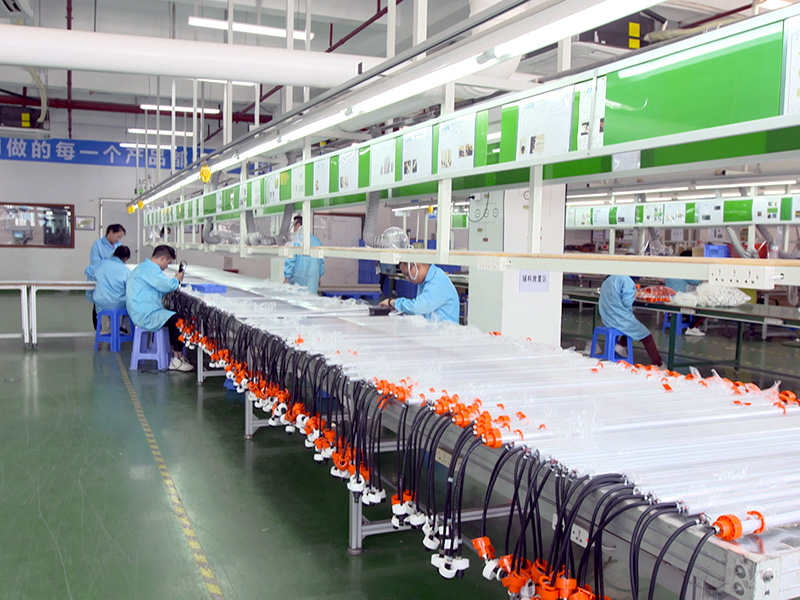
In modern agriculture, the lighting system is no longer viewed as a simple utility; it is a vital management tool. The concept of animal-friendly lighting (AFL) moves beyond simply illuminating a space. It refers to scientifically engineered lighting solutions that are precisely tailored to the biological needs of specific livestock, minimizing stress, promoting natural behaviors, and—crucially for commercial operations—maximizing production efficiency.
For large-scale poultry, swine, and dairy farms, adopting true AFL is the fastest path to realizing a tangible return on investment (ROI) in production, health, and energy savings. Companies specializing in commercial led barn lights, such as szAMB, recognize that maximizing animal welfare is inextricably linked to maximizing output. True animal-friendly lighting must address three critical components: light quality (flicker and spectrum), intensity management, and environmental resilience.
The Invisible Stressor: Why Flicker-Free is Non-Negotiable
One of the most profound differences between human and animal perception lies in their ability to detect flicker. This distinction is paramount when selecting lighting systems for livestock houses.
The Science of Flicker Perception
Humans typically stop consciously perceiving light flicker around 50 to 60 Hertz (Hz). However, farm animals, particularly poultry, have a much higher flicker fusion frequency (FFF). Research indicates that chickens and turkeys can detect flicker up to 160 Hertz or higher. A standard light fixture with a flicker frequency below this threshold—which would appear steady to the human eye—will be perceived by the bird as a rapid, disturbing strobe effect.
This constant, high-frequency pulsing acts as a chronic, invisible stressor. Studies have linked visible and near-visible light flicker to:
- Increased Mortality: Birds exposed to visible flicker often exhibit higher overall mortality rates.
- Aggressive Behavior: Stress caused by flicker can manifest as increased aggressive behaviors, such as feather pecking.
- Reduced Performance: Light flicker can disrupt feeding patterns and lead to lower body weight gain or reduced feed conversion ratios (FCR) in certain production stages.
To truly be an animal-friendly lighting solution, a fixture must guarantee a high-frequency, flicker-free output across the entire dimming range. This is why szAMB has engineered its systems with industry-leading, flicker-free dimming technology (0-100% dim-to-0.2% technology), ensuring a smooth, stress-free visual environment that supports, rather than disrupts, animal biology.
Tuning the Light Spectrum for Optimal Production
The days of one-size-fits-all white light are over. Different species, and even different life stages within a species, have unique visual systems that respond to different wavelengths (colors) of light.
Poultry and the Tetra-Chromatic Advantage: Poultry possess tetra-chromatic vision, meaning they have four cone types, including one sensitive to the Ultraviolet A (UVA) region. They utilize this advanced color vision for social signaling and foraging.
Broilers & Pullets: Light in the blue/green spectrum is often calming, helping to reduce stress and promoting growth, especially during early development.
Layers & Breeders: Red-enhanced white light is crucial. Longer wavelengths (red light) penetrate deeper into the skull to stimulate the photoreceptors in the brain, effectively activating the reproductive axis. This directly translates to prolonged peak production periods and substantially increased egg yield, a key value proposition delivered by specialized szAMB solutions.
Cattle and Dichromatic Vision: Dairy cattle possess dichromatic vision, meaning they see in blues and greens but not red well. For daytime, they thrive under cool-white or daylight color temperatures (5500K-6500K) that mimic natural sunlight.
Night Use: A crucial AFL strategy is the use of low-intensity red light during the rest period. Because cattle do not see red light well, it allows workers to perform nighttime checks without disturbing the cows’ crucial six to eight hours of darkness. This minimal disturbance ensures maximum melatonin release, which is necessary for maintaining reproductive health and milk production hormones.
Proper AFL systems, therefore, must offer specific, sometimes tunable, spectral outputs to align with these sophisticated biological needs.
The szAMB Standard: Intelligent Control and Unmatched Durability
Beyond light quality, the two final pillars of truly commercial led barn lights are control and resilience.
Intelligent Control for Welfare
Abrupt changes in light intensity are highly unnerving for most livestock, which can lead to panic and injury. A truly animal-friendly lighting system must incorporate intelligent control for gradual, automated light transitions.
szAMB’s Smart LED Dimmer systems provide this precise control through a Master & Slave architecture and programmable timetable management. This allows farms to flawlessly replicate natural sunrise and sunset patterns over a programmed period, from 0% to 100% intensity, effectively lowering stress and reducing aggressive behaviors at critical transition times. Furthermore, the light distribution must be uniform to eliminate shadows, which are natural stress and injury points in a barn environment.
Built for the Battle: Durability and Longevity
In a B2B context, animal welfare is only sustainable if the equipment is reliable. The aggressive nature of the barn environment—with high humidity, corrosive ammonia vapors, and high-pressure sanitation washdowns—will destroy standard fixtures. szAMB ensures that the lighting solution remains operational and consistent for years, protecting the sensitive photoperiod management that drives productivity.
In conclusion, implementing animal-friendly lighting is a strategic investment. By choosing scientifically backed commercial led barn lights that prioritize flicker reduction, spectral tuning, intelligent dimming, and unmatched durability, farm operators secure enhanced animal welfare and achieve significant, measurable improvements in production yields, feed conversion, and operational efficiency.
