
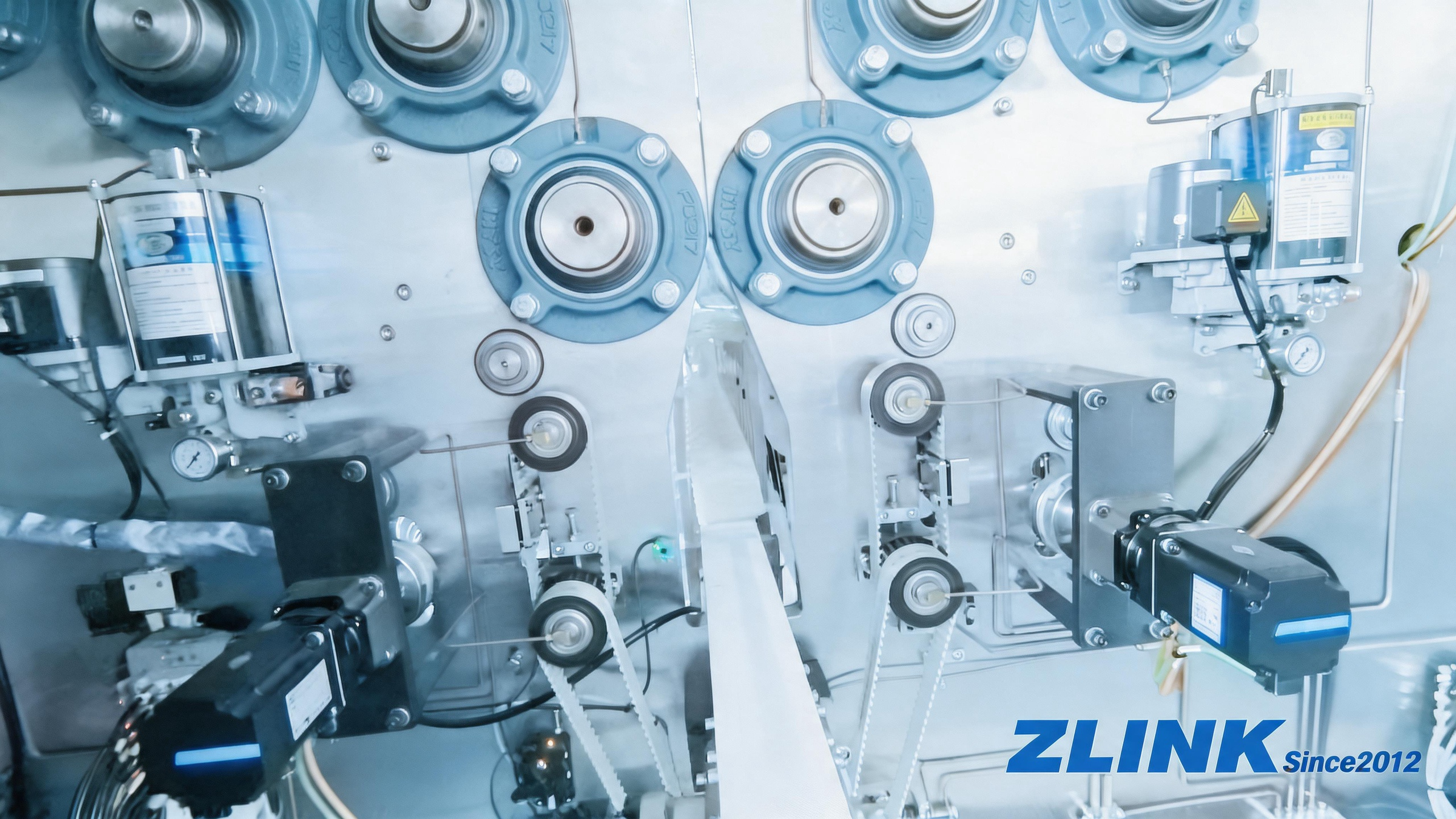
Engineering an automated wet wipe manufacturing facility requires a deep technical understanding of continuous substrate processing and integrated motion control system architecture. Modern converting facilities rely on synchronized material transitions from unwinding raw nonwoven rolls through precision cutting and flexible packaging to prevent structural defects or mechanical jams. Selecting an efficient wet wipes production line helps manufacturing directors streamline primary factory workflows while maintaining strict quality consistency across continuous shifts. As an experienced wet wipes production line integrator ZLINK provides automated processing systems designed to balance operational throughput with high hygienic manufacturing standards.
Automated Nonwoven Unwinding and Multi Lane Web Control Modules
The initial processing stage of a converting line begins at the raw material feeding station where continuous jumbo nonwoven rolls undergo automated unwinding and continuous tension adjustments. Dual axis unwinding racks equipped with electronic web guiders maintain accurate central alignment while pulling nonwoven sheets through tension rollers at constant velocity. Splicing units execute automatic non stop roll changes to prevent line stoppage during raw material replenishment cycles while optical sensors monitor web tracking continuously.
When reviewing unwind modules, plant teams may also compare roll weight, core specification, splice preparation space, and operator access with ZLINK line configuration options. A balanced review of tension control, web guiding, and changeover routines can help reduce unnecessary web disturbance and support stable feeding as product formats change.
Automated slitting modules then divide broad nonwoven webs into designated lane widths ensuring smooth material alignment into dedicated longitudinal folding mechanisms.
Synchronized Cross Folding and Precision Substrate Cutting Stages
Once slitting is complete folded nonwoven ribbons enter high speed mechanical folding plates engineered to produce exact cross fold or interfold panel configurations. Driven traction rollers pull nonwoven sheets through precise guiding channels without introducing stretch distortion or fiber misalignment along the material edges. The continuous nonwoven web then passes through specialized rotary cutting assemblies where flexible screw type blades deliver clean crosscuts with minimal mechanical shock. Maintaining tight mechanical synchronization between web drive motors and rotary cutter shafts ensures uniform sheet dimensions before the nonwoven stacks enter liquid dosing zones.
Precision Fluid Distribution and Automated Solution Dosing Modules
Liquid application modules require dedicated dosing pumps and sanitary fluid circulation lines to deliver consistent lotion volume across every single converted nonwoven layer. Multi point spray manifolds and electronic flowmeters regulate lotion impregnation rates dynamically matching chemical dosing to continuous line speed variations automatically.
Lotion dosing reviews may include viscosity range, target add-on rate, cleaning access, and fluid line layout. ZLINK wetting modules can be discussed with pump selection, flowmeter placement, and drain points matched to the intended formulation. Such planning can help operators manage changeovers and sanitation routines while keeping dosing adjustments aligned with line speed changes.
Integrating a high performance ZLINK Series wet wipes production line can help facilities control solution impregnation ratios across different dry fabric weights and reduce the risk of over-saturation. Stainless steel fluid manifolds with low point drain configurations allow complete fluid flushing to simplify sanitation routines and meet strict personal care standards.
Flow Wrapping Packaging Integration and Continuous Motion Indexing
Downstream material flow transitions stacked wet wipes directly into automated flow wrapping machinery where protective film rolls envelope stacked product units continuously. Multi axis servo drives synchronize film feeding punching and longitudinal heat sealing parameters to generate hermetically sealed flow packs without thermal distortion. Continuous web splicing mechanisms on film rolls eliminate downtime during packaging material changes while integrated tracking sensors align printed graphics precisely over each pack. Dynamic sealing jaws control temperature and pressure continuously ensuring consistent seal strength across diverse laminated packaging films during full speed operation.
Automated Robotic Lid Application and End of Line Quality Inspection
Finished flow packs advance toward specialized robotic lid application units where vision systems guide pick and place arms to center plastic caps accurately. Hot melt adhesive dispensing nozzles apply controlled adhesive patterns before robotic lid placement, helping achieve consistent bonding while reducing adhesive overflow onto the outer packaging surface. Spectral decomposition detectors checkweighers and optical vision sensors audit finished packages continuously for seal defects incorrect liquid weight or label misalignments before casing. Deploying automated ZLINK wet wipes machinery allows modern manufacturing plants to identify non conforming packages immediately removing them via pneumatic pushers without disturbing continuous line speeds.
Digital Line Integration and Automated Material Logistics Management
Modern wet wipe factories connect converting line controllers to supervisory control systems to log operational telemetry and track real time machine performance indicators. If you’re planning how these production, packaging, digital control, and material handling systems should work together across a complete facility, you can also read ZLINK’s wet wipes manufacturing plant guide for more information on factory layout, equipment planning, automation, and commissioning.
Digital integration can be approached in stages, starting with machine-level data such as speed, temperature, and run status. ZLINK equipment can be specified with interfaces for supervisory monitoring and recipe storage where plant IT and controls teams require it. A phased review of data points and operator screens can help keep integration practical and aligned with existing factory systems.
Centralized touch screen interfaces display current operating speeds heating zone temperatures and fluid flow rates while storing customized recipe parameters for fast product changeovers. Integrated logistics configurations utilize automated guided vehicles to transport raw nonwoven jumbo rolls and packaged finished cases between processing bays and warehouse areas seamlessly. Standardizing material handling across all manufacturing modules optimizes total equipment effectiveness while enabling factory managers to maintain repeatable quality output consistently.
