
The article explains why original equipment manufacturers (OEMs) should prioritize a dependable insulation supplier when designing and producing electric motors, transformers, generators, and new-energy drive systems. It frames procurement, engineering, and quality teams’ decision criteria around supply stability, certified quality, and technical support. The analysis references capabilities typical of mature electrical insulation material suppliers and highlights how a partner like Sui On Insulating can reduce risk across product development and production lifecycles.
Certifications, quality assurance, and manufacturing readiness
For OEMs, the choice of an insulation supplier extends beyond unit price to encompass certified quality systems and process maturity. Leading electrical insulation material suppliers provide comprehensive quality assurance and operate under internationally recognized standards—ISO9001, ISO14001, and IATF16949—often audited by third parties such as German TUV. These systems ensure traceability, consistent process control, and continuous improvement, which directly lowers qualification time for new components and reduces field-failure risk. Production capabilities and capacity planning matter as well: suppliers that actively expand processing capabilities and maintain multiple manufacturing sites help OEMs mitigate single-source shortages. A reliable insulation supplier will also offer sample programs and documented lot histories so engineering teams can validate dielectric strength, thermal endurance, and mechanical properties under realistic conditions. When temperature or cooling strategies (oil- or water-cooled systems at 400 V or 800 V) are design drivers, the supplier’s ability to deliver materials matched to those operating envelopes is essential to meet safety and performance specifications.
Technical breadth and product-solution alignment
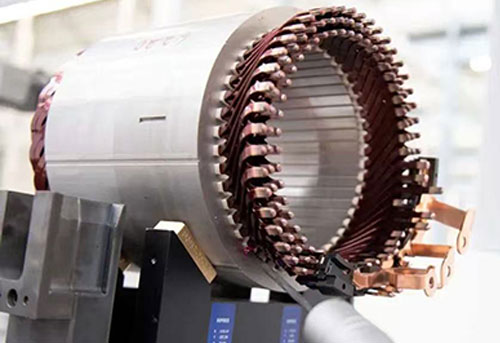
OEMs face diverse electrical insulation needs across motors, generators, transformers, and power electronics. Top electrical insulation material suppliers combine a broad product portfolio with tailored processing services—cold stamping, hot forming, ultrasonic welding, cutting, and composite/adhesive processing—to integrate insulation into complex assemblies efficiently. Suppliers that present professional solutions for new electric vehicle traction motors, addressing heat dissipation and dielectric stability, provide tangible value by shortening design cycles and improving product reliability. Comprehensive system-level support—material selection, lamination, wire-slot liners, and bonding methods—enables OEMs to optimize cost of ownership while meeting regulatory and performance requirements.
Strategic supplier selection and supply-chain resilience
Choosing an insulation supplier is a strategic decision that affects time-to-market, warranty exposure, and scalability. Enterprise strength and global footprint matter: suppliers with decades of experience, multiple production sites, and a track record supplying well-known domestic and international manufacturers reduce geopolitical and logistical risk. Sui On Insulating, for example, combines multi-site manufacturing, a robust certification profile, and diversified processing services to serve high-volume industrial customers. For procurement and engineering stakeholders, partnering with resilient electrical insulation material suppliers supports predictable supply, technical collaboration, and continuous improvement.
Final appraisal: Selecting an insulation partner that supports OEM objectives
OEMs derive measurable benefits from a reliable insulation supplier: certified quality systems, relevant processing capabilities, and a comprehensive products-and-services portfolio reduce engineering uncertainty and lifecycle costs. When supplier selection aligns with technical requirements and supply-chain resilience, OEMs are better positioned to deliver safe, efficient, and market-competitive products.
