
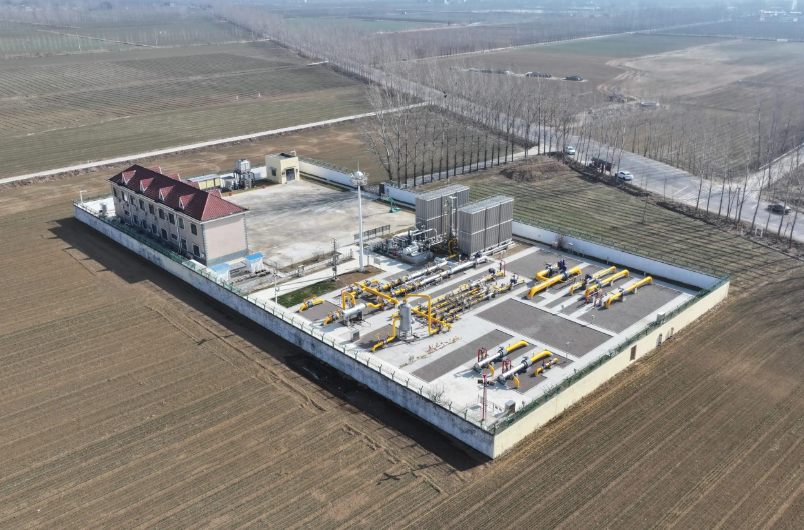
Natural gas is transported at high pressures across long distances to reach distribution points. At these critical junctions, operators must significantly reduce the pressure before sending the gas safely to local consumers. Traditionally, throttling valves handle this pressure drop, but they simply dissipate the inherent potential energy as heat and noise, resulting in inefficiency.
By upgrading infrastructure, operators can capture this wasted energy. A turbo expander can be installed to replace or run parallel to existing valves. It converts the pressure differential into mechanical work, driving a generator to produce electricity. However, not every location is suitable for this technology, making thorough evaluation essential.
Before committing to a formal engineering feasibility review, operators must conduct a comprehensive preliminary assessment. Gathering the right operational data early saves valuable time and prevents capital misallocation. This specific guide outlines the essential checklist items operators must compile to accurately evaluate their site’s energy recovery potential.
Gathering Critical Pressure and Flow Data
The fundamental driver of any energy recovery project is the available pressure differential. Operators must diligently document the historical maximum, minimum, and average inlet pressures arriving directly from the main transmission pipeline over a sustained period to establish a reliable baseline.
Next, they need to verify the exact required outlet pressure for the local distribution network. The difference between these inlet and outlet values dictates the potential mechanical energy available. A larger and highly consistent pressure differential generally indicates a much more viable and profitable energy recovery project.
Gas flow rate is equally critical to this calculation. Operators should extract at least one full year of continuous flow data to understand seasonal variations. A city gate station experiencing massive flow fluctuations between summer and winter seasons may require specialized, highly adaptable turbine designs to maintain efficiency.
Consistent, high-volume gas flow yields the most reliable return on investment. If the flow rate drops too drastically during off-peak months, the expander may operate inefficiently or need to be bypassed entirely. Documenting these flow extremes ensures engineers can model the system’s performance accurately across all operational scenarios.
Evaluating Strict Downstream Constraints
Generating power through gas expansion causes a significant temperature drop. Operators must clearly understand the strict temperature limits of their downstream pipeline network. Standard carbon steel pipes can become dangerously brittle and potentially fail if exposed to the extreme cold generated by unheated gas expansion.
Therefore, operators must identify the absolute minimum allowable downstream gas temperature. This specific constraint dictates exactly how much pre-heating is required before the gas enters the expansion turbine. This heating requirement heavily influences the overall system design, operational complexity, and ongoing fuel costs.
Customer requirements also form a crucial downstream constraint. Industrial consumers often require gas delivered at highly specific temperatures and pressures. Any energy recovery system installed at a pressure regulating station must never compromise the primary operational goal of reliable, precise, and uninterrupted gas delivery to these end users.
Operators should compile a comprehensive list of critical downstream consumers and review their specific supply contracts. The proposed recovery system must include robust automated bypass valves to guarantee continuous service if the turbine requires scheduled maintenance or experiences an unexpected operational shutdown.
Analyzing Site Area and Physical Footprint
Energy recovery systems require significantly more physical space than standard throttling valves. Operators must carefully measure the available footprint within their current facility boundaries. Upgrading infrastructure typically involves adding the turbine itself, a generator, large pre-heaters, and advanced electrical control panels.
Site access is another vital physical constraint to document. Large, heavy rotating equipment must be delivered, safely installed, and routinely maintained. Operators should assess local road access, facility gate widths, and overhead clearances for heavy lifting cranes during the initial data-gathering phase.
Hazardous area classifications must also be thoroughly mapped. Electrical generators and automated control systems must strictly comply with local explosion-proof regulations if placed near natural gas lines. If the site is too cramped to safely separate these zones, the project may face severe regulatory and safety hurdles.
Noise constraints are directly tied to the specific site location. Turbines and generators produce distinct acoustic profiles during continuous operation. If the facility is located near a residential area or commercial zone, operators must note local noise ordinances to determine if expensive acoustic enclosures will be necessary.
Assessing Heating and Cooling Demands
As previously mentioned, gas temperatures plummet during expansion. To prevent freezing, pre-heating the gas is almost always a mandatory requirement. Operators must evaluate the site’s existing capacity to generate this necessary thermal energy efficiently and cost-effectively without negating the power generation gains.
Assess the availability of fuel gas for traditional water bath heaters. Alternatively, operators should investigate if there is an existing source of industrial waste heat nearby. Utilizing waste heat from an adjacent manufacturing facility or compressor station can drastically improve the project’s overall thermodynamic efficiency.
In some advanced operational setups, the cold thermal energy generated by the expansion process can actually be captured and utilized. If a nearby facility requires cooling, such as a large cold storage warehouse or a data center, this cold energy can become an additional, highly valuable asset.
Operators should note any local cooling demands during their site assessment. Integrating electrical power generation with cold energy recovery significantly boosts the overall efficiency and economic return of the entire installation, maximizing the utility of the natural gas expansion process.
Preparing the Final Data Package
Once the pressure data, flow profiles, physical site dimensions, and thermal demands are compiled, operators possess a complete preliminary checklist. This highly organized data package allows engineering teams to accurately model the thermodynamic and economic potential of the specific site with confidence.
From Data Checklist to Project Decision
A complete preliminary package of pressure profiles, flow history, thermal limits, and site constraints turns guesswork into a defensible investment decision. Joulong Energy Technology Co., Ltd. designs turbine expanders and pressure-differential recovery systems for natural gas stations, with ODM-level engineering and site-specific configuration focused on stable operation and energy recovery efficiency. Share your station’s pressure and flow data with Joulong to start a tailored site assessment.
